Enjoying Kimono Through Spring, Summer, Autumn, and Winter
One of the great charms of kimono is how vividly it reflects the four seasons. Western clothing can express seasonality too, but kimono takes it to another level — motifs like cherry blossoms and autumn leaves appear directly in the patterns, and the color palette shifts dramatically with the seasons.
Beginners often wonder: "How do I choose a kimono and obi that actually suit the season?" Here, we'll walk through simple coordination ideas for spring, summer, autumn, and winter.

Spring Kimono Coordination — Soft, Gentle, and Bright
Spring is the season of new beginnings and new encounters. Leaning into soft, bright colors will naturally bring out that seasonal feeling in your outfit.
Base colors:
Kimono: pale pink, wisteria purple, young grass green
Obi: white, light beige, soft gold or silver

Coordination examples:
A pale pink komon (a casual kimono with a small repeating pattern) × a white-based Nagoya obi (a simpler, everyday obi), with a young-grass-green obijime (the cord tied over the obi) as an accent
A wisteria-purple solid-color kimono × a beige Hakata obi (a lightweight, woven obi), with a pale cherry-blossom-pink obiage (the sash tucked above the obi)
Cherry blossom and butterfly motifs are also popular in spring. That said, using them too much can tie an outfit too tightly to a single moment in the season, so beginners will feel safest building around spring-appropriate colors as a base.
Summer Kimono Coordination — Cool Comes First
In summer, creating a visual sense of coolness is the top priority. Sheer, lightweight kimono fabrics like ro or sha are commonly used, and brighter, airier obi tend to look best alongside them.
Base colors:
Kimono: light blue, pale indigo (asagi), white, soft gray
Obi: navy, silver, refreshing shades of blue

Coordination examples:
A light blue ro-weave komon × a navy ra-weave obi, with a white obijime for a crisp finish
A white-based summer kimono × a gray hemp obi, with a touch of pale blue in the obiage
Motifs like flowing water, goldfish, and morning glories are popular in summer for the cool feeling they evoke just by looking at them. Adding an obidome (a decorative clasp on the obijime) made of glass or shell is another easy way to bring in a summery touch.
Autumn Kimono Coordination — Rich and Composed
In autumn, colors evoking fall foliage and harvest take center stage. Choosing slightly deeper tones than in spring or summer strikes a nice balance between composure and seasonal flavor.
Base colors:
Kimono: deep crimson (enji), mustard yellow, deep green, brown tones
Obi: dark brown, deep navy, gold-thread accents

Coordination examples:
A deep crimson komon × a deep navy Nagoya obi, with a mustard-yellow obijime to add an autumnal touch
A mustard-yellow kimono × a dark brown Hakata obi, with a deep green obiage to bring out the season
Autumn leaves, chrysanthemums, and pampas grass are classic motifs for the season. Since this time of year can feel a bit subdued, adding a slightly brighter accent color through the obi or accessories helps keep the balance right.
Winter Kimono Coordination — Elegant and Refined
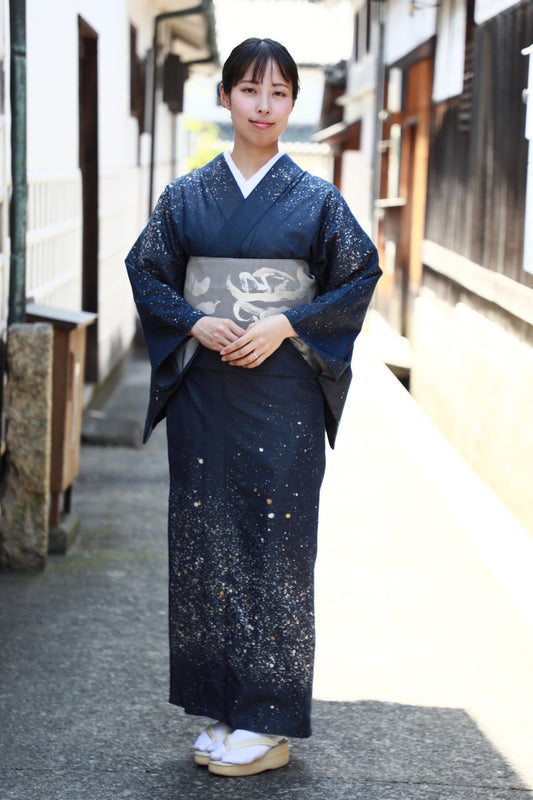
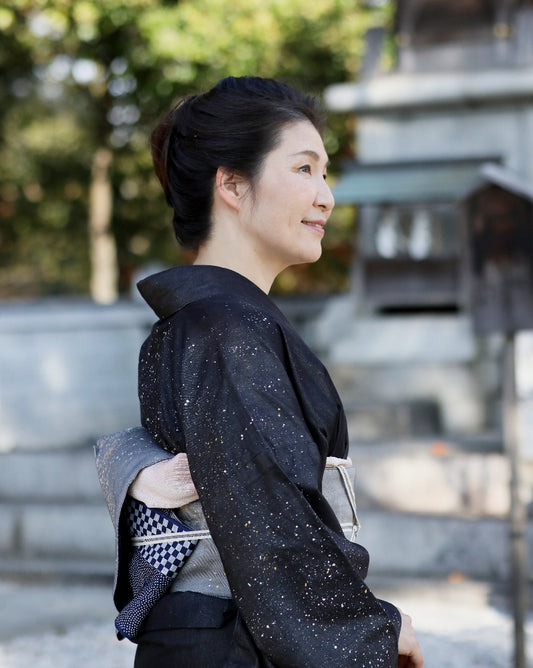
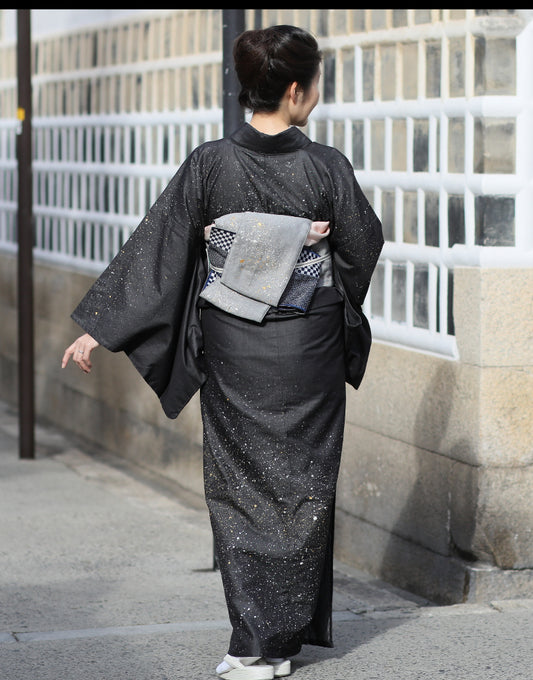
Winter brings festive occasions like Christmas and New Year, so it's worth leaning a little more formal with your coordination. Sophisticated dark colors paired with gold- or silver-accented obi tend to look especially striking.
Base colors:
Kimono: black, deep navy, silver-gray, deep purple
Obi: gold, silver, white with an elegant, refined pattern
Coordination examples:
A black-based hōmongi (a semi-formal kimono with a continuous pattern across the seams) × a fukuro obi (a formal, double-woven obi) with gold and silver accents, with a red obiage to create a festive mood
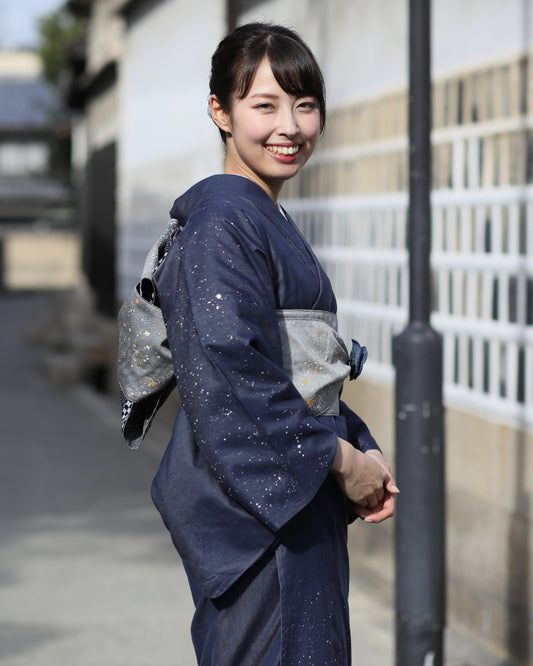
A deep navy komon × a white-based Nagoya obi, with a silver-thread obijime for a wintry touch
Auspicious motifs like snow rings (yukiwa), pine-bamboo-plum (shō-chiku-bai), and cranes suit the winter season beautifully. Around New Year especially, even a fairly showy obi tends to look perfectly natural.

Versatile Coordination Tips That Work Year-Round
Building a full wardrobe for all four seasons can be a lot for a beginner. In that case, it helps to build around colors that work all year long:
A beige or gray kimono → can be adapted to any season just by changing the obi
A navy or purple obi → pairs easily with kimono in any season
By combining "basics" with "seasonal accessories," you can enjoy kimono through all four seasons even with a fairly small collection.
In Summary (1): Start by Reading the Season Through Color

Pattern and fabric both play a role in expressing the season in kimono, but for beginners, focusing on color alone is more than enough:
Spring → bright, soft tones
Summer → cool colors and white
Autumn → deep, warm tones
Winter → sophisticated dark colors with gold and silver
Start by looking at the kimono and obi you already own and asking yourself, "Which season does this color suit?" As your color sense develops, seasonal coordination will start to feel natural and enjoyable.
In Summary (2): Consider an Obi That Works in Any Season

Beyond the fukuro obi and Nagoya obi, there's also the hanhaba obi (a narrower, casual obi) — often called hanbaobi as well. Many people have tied one while wearing a yukata (a casual summer kimono), but the hanhaba obi isn't limited to yukata — it also pairs nicely with casual kimono.
What's more, with a few exceptions, most hanhaba obi can be worn year-round, regardless of season, making them a wonderfully flexible choice. Choosing a hanhaba obi with seasonal colors in mind is an easy way to enjoy kimono even more casually.

Kojima Obi specializes mainly in hanhaba obi, including elegant designs in high-quality fabrics that can be styled with a wide range of kimono to suit your own taste and occasions. We hope you'll take a look.