Pairing Patterned Kimono with Patterned Obi (Intermediate Level)
One of the greatest joys of kimono coordination is pattern-matching. As a beginner, though, you may have stuck to the rule "a patterned kimono needs a plain obi."
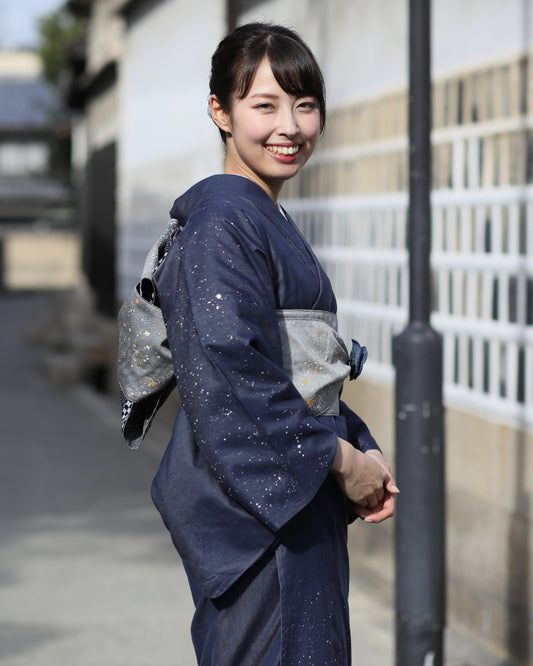
Once you're ready to move to the intermediate level, it's time to try "pattern × pattern" combinations. It can feel intimidating at first, but once you know a few basic tricks, you'll be able to put together a harmonious, stylish outfit.

Combine a Large Pattern with a Small Pattern
The most fundamental rule is pairing a large-scale pattern with a small-scale one.
If the kimono has a large pattern, choose an obi with a smaller, more understated one.
If the kimono has a small pattern, choose an obi with a bolder, larger one.
Just keeping this balance in mind is enough to stop the two patterns from clashing and to create rhythm throughout the outfit.
Examples:
A komon (casual kimono with a small repeating pattern) featuring large peony motifs → paired with an obi in a fine ichimatsu (checkerboard) pattern
A komon with tiny floral motifs → paired with an obi in a bold geometric pattern
Even with "floral × floral," changing the scale of the patterns creates contrast and helps everything come together.

Match the Color Tone
When combining two patterns, it also matters that the color tones — brightness and vividness — match.
If the kimono has soft, muted tones, keep the obi's tones soft too.
If the kimono has a more sophisticated, subdued palette, choose an obi in a similarly calm tone.
When the tones align, even very different patterns will look naturally harmonious. On the other hand, pairing a soft pastel kimono with a bold, primary-colored obi tends to feel jarring.

Find a Shared Color
When matching two patterns, look for a color that appears in both the kimono and the obi — this helps tie the whole look together.
For example:
A pale green found in the kimono's pattern also appears somewhere in the obi
The kimono's base color and an accent color in the obi are the same shade of beige
Even a single shared color like this can create a surprising sense of unity. If you can't find a shared color, accessories like the obijime (the cord tied over the obi) and obiage (the sash tucked above the obi) can help bridge the gap.

Align the Pattern's Theme
Every pattern carries its own meaning and mood. When combining two patterns, matching their theme or seasonal association creates a beautiful, cohesive look.
Examples:
A cherry-blossom-patterned kimono × an obi scattered with falling cherry petals → a unified spring feel
A geometric-patterned kimono × an obi with abstract motifs → a cohesive, modern mood
A kimono with autumn-leaf motifs × an obi in a karakusa (arabesque vine) pattern → a rich, autumnal combination
If the themes differ — say, "floral × geometric" — you'll need accessories to bridge the gap. But if the themes are related, the outfit will come together cleanly on its own.

Adjust the Pattern Density
The "density" of a pattern is another key factor — that is, whether the pattern is packed tightly together or spaced out more loosely.
If the kimono's pattern is densely packed → choose an obi with a design that has more open space.
If the kimono's pattern is more spread out and understated → choose an obi with a finer pattern to add an accent.
Pairing "dense × dense" can feel heavy, while "sparse × sparse" can feel empty — so aim for contrast between the two.
Using Accessories to "Bridge" Patterns
Even when combining two patterns carefully, there are moments when something still feels slightly off. That's when accessories can help.
Obijime: Choosing a color that appears in both the kimono and the obi creates natural harmony.
Obiage: Helps soften the overall tone or add a subtle accent.
Han-eri (the collar worn under the kimono collar): Creates a bit of visual "breathing room" between the two patterns.
Accessories act as a bridge between patterns, and using them well is a key part of mastering intermediate-level coordination.

A Safe Way to Level Up
If you want to try "pattern × pattern" but feel unsure, here's a step-by-step way to build up to it:
Plain kimono × patterned obi (beginner level)
Small-patterned kimono × nearly plain obi (entry point to intermediate)
Small-patterned kimono × large-patterned obi
Large-patterned kimono × small-patterned obi (intermediate and above)
Pattern × pattern (keeping color families or themes in mind)
Gradually adding more pattern at each stage will naturally build your sense of style.
In Summary: Pattern-Matching Is the Art of Balance
Here's a quick recap of the key tips for combining patterned kimono and obi:
Combine a large pattern with a small pattern
Match the color tone
Find a shared color
Align the theme or seasonal feel
Adjust the pattern density
Use accessories to bridge the gap
Keep these in mind, and even "pattern × pattern" — something many beginners tend to avoid — can come together beautifully. The real joy of kimono coordination lies in understanding the rules and then enjoying the freedom to play within them.
It may feel a little challenging at first, but the more you experiment, the sharper your eye will become, until eventually you develop a style that's entirely your own. Take that first step and enjoy discovering the fun of pattern-matching.

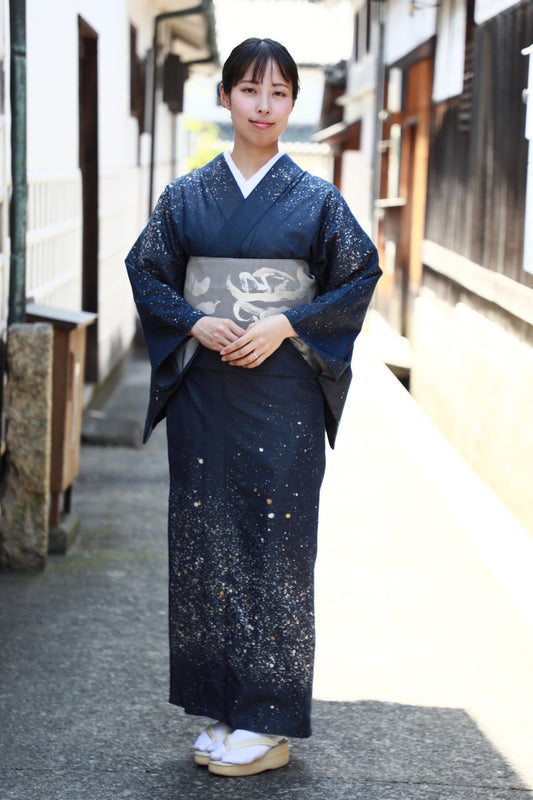
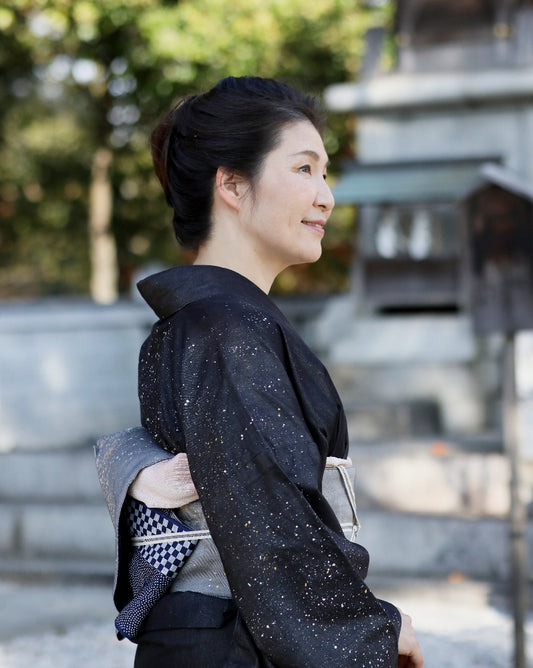
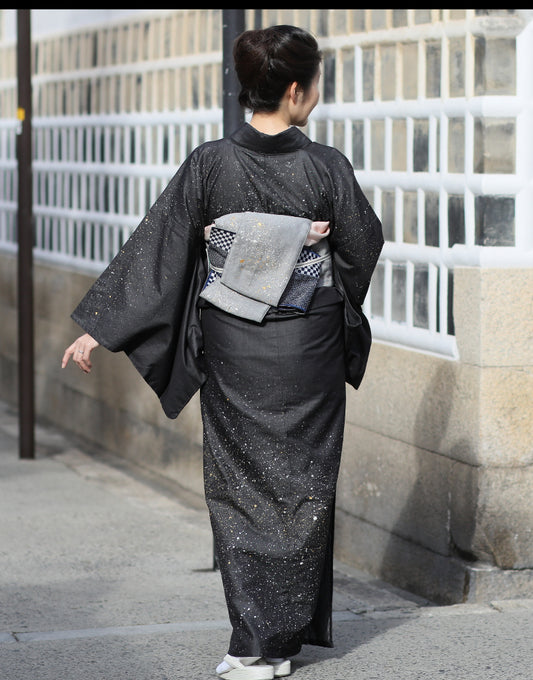
One more suggestion: consider matching the patterns of the kimono and obi themselves.
Typically, kimono and obi are made by different workshops or artisans, so they aren't often designed as a set. That means putting them together yourself, which requires a sense of theme and color balance.
If that feels a little daunting, why not choose a kimono and obi made as a set by the same workshop? At Kojima Obi, you can choose pre-matched sets or even have a custom set made to order. Since the pattern and fabric are shared, the kimono and obi are guaranteed to complement each other beautifully.
We hope this helps you enjoy kimono even more.