Elevating Your Look with Obijime and Obiage
The choice of obijime (the cord tied over the obi) and obiage (the sash tucked above the obi) can make or break the polish of a kimono outfit. Beginners tend to match these accessories closely to the obi's color, but more advanced wearers use them to shape the entire impression of an outfit with real intention.
Here, we'll introduce the techniques advanced kimono wearers use to elevate a look through obijime and obiage.
Accessories Elevate a Look Through Subtraction
The more experienced the wearer, the less they aim for a flashy look. The key is keeping the overall color count low and letting fabric and texture create depth instead.
● The role of the obijime
The obijime anchors the visual centerline of the outfit.
Using too strong a color can pull the eye straight to the obi area and undercut the outfit's elegance.
Choosing a neutral tone — beige, gray, deep green — tends to pull everything together naturally.
● The Role of the Obiage
The obiage acts as a soft "cushion," gently connecting the obi and the kimono.
Avoiding bold colors or patterns in favor of a subtle gradient dye (bokashi-zome) or shibori (tie-dye) technique creates a sense of depth.
Once you're comfortable with this, the simple sheen of silk alone can carry a real sense of mature elegance.

Using Fabric Texture to Control Formality
・Rinzu: A glossy silk damask, ideal for hōmongi (a semi-formal kimono with a continuous pattern across the seams) or tsukesage (a similar, slightly less formal style). Recommended when you want to convey real elegance.
・Chirimen: A crepe weave with a more subdued sheen, giving a calmer impression. A perfect match for casual kimono like tsumugi or komon (a casual kimono with a small repeating pattern).
・Shibori: Full-shibori pieces have real volume and suit the vibrant look of a furisode (a long-sleeved kimono worn by young, unmarried women) or a younger wearer's outfit. Partial-shibori obiage, on the other hand, can be enjoyed at any age.
Matching the formality of your fabric to the occasion is what creates that sense of cohesive, high-quality polish.
Creating Depth Through Color Contrast
In advanced coordination, adding just a touch of contrast within an otherwise same-color-family palette creates a real sense of dimension.
Example 1: A pale pink komon × a gray-beige obi → adding a burgundy obijime pulls the whole look together, bringing a touch of brightness to an otherwise composed outfit.
Example 2: A deep green kimono × a beige obi → using a pale cream obiage draws the eye upward, adding a sense of lightness to the whole silhouette.
This calculated use of accessories to either "tighten" or "brighten" an outfit by one notch is a hallmark of advanced technique.

Expressing the Season Through Obijime and Obiage
Bringing seasonal color into your accessories is another pleasure of advanced coordination. Even without changing the pattern or fabric of your kimono and obi, color alone is often enough to express the season:
Spring: soft tones like cherry-blossom pink, young grass green, or pale wisteria purple
Summer: cool tones like white, light blue, or pale gray — ro or hemp fabrics work beautifully too
Autumn: composed tones like deep crimson (enji), mustard yellow, or deep green
Winter: rich, weighty tones like deep navy, purple, or silver-gray
Expressing the season through just one of the two — either the obijime or the obiage, not both — tends to give the most refined, elegant result.
Key Points for Elevating Your Obijime and Obiage
Advanced wearers can completely shift the impression of the same kimono and obi just by how they choose their accessories.
Occasion Obijime Obiage Key Point
Formal Flat-braided silk in a light tone Rinzu silk Clean and dignified
Theater / dinner A braided cord with pattern or color Elegant chirimen or dyed silk Adds a touch of glamour
Casual Textured materials like tsumugi or Hakata-braid Patterned or shibori-dyed Light and playful

In Summary: Accessories Elevate the Whole Outfit
Obijime and obiage aren't just decoration — they're the key element that determines how polished a kimono outfit feels overall.
Restraint, paired with an eye for fabric and tone, is exactly what defines the aesthetic sense of an advanced wearer.
Try building outfits where a subdued color palette still conveys real depth and ease.
Elegance truly lives in the details, and it's often the accessories where that sense of refinement shows through most clearly.
If you want to practice letting your accessories really shine, choosing a kimono with minimal color or pattern makes for great practice.
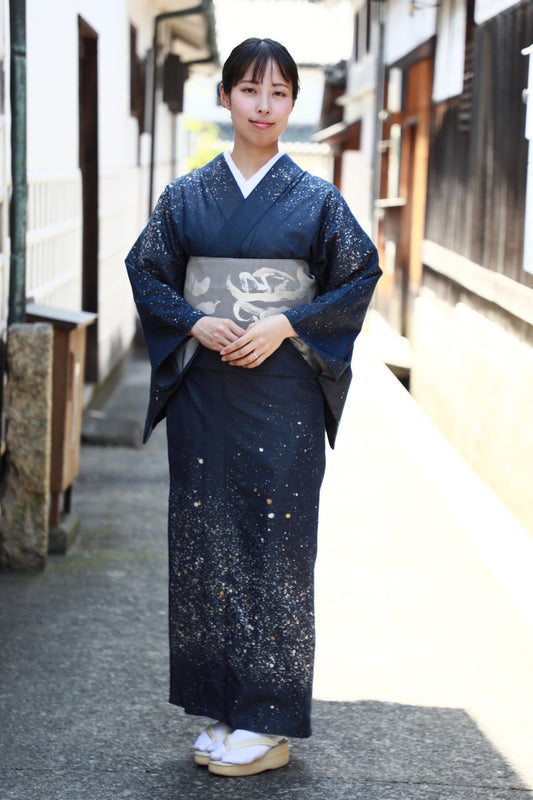
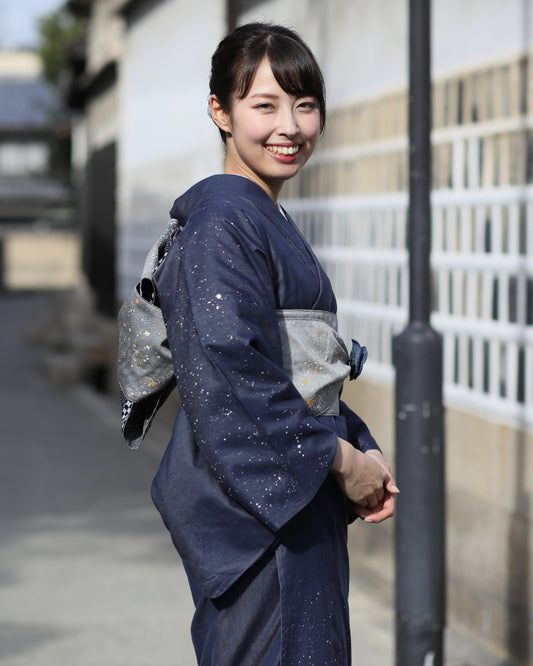
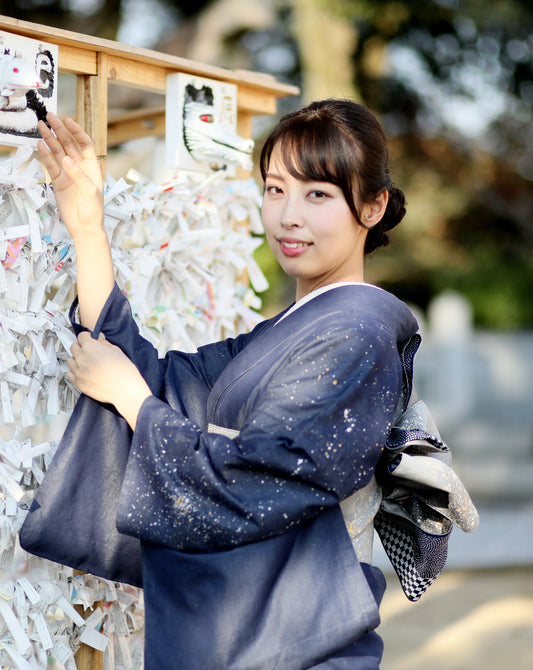
And speaking of color — navy is a shade that carries a strong positive association across both Western and Japanese fashion alike, often read as clean and sincere.

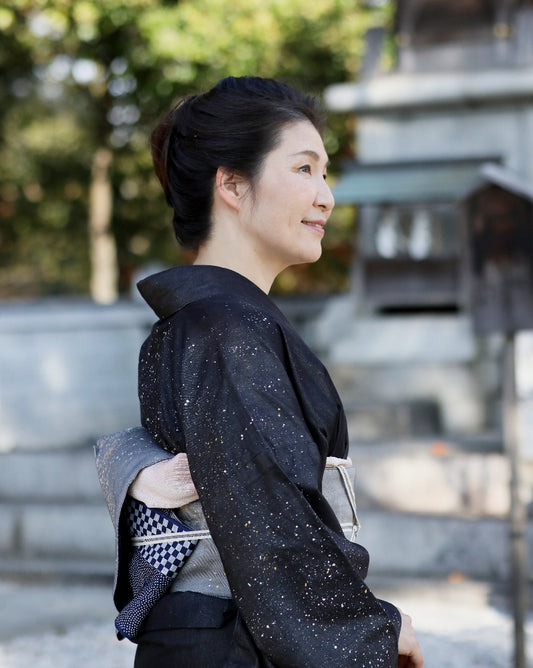
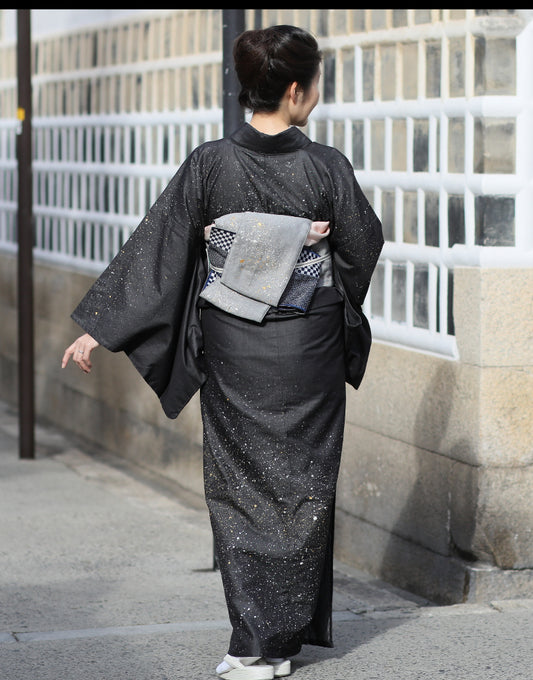
What accessories would you choose here?
We hope you'll keep sharpening your own eye for style.