Wearing Antique Kimono with a Modern Touch
There's a beauty that only comes with time, and antique kimono carry it in spades.
The distinctive colors and patterns of the Taishō era through the early Shōwa era have a charm you simply won't find in modern kimono.
But get it wrong, and the same piece can end up looking dated instead.
Here are some tips for wearing antique kimono in a way that feels elegant and thoroughly modern.

Understanding the Appeal of Antique Kimono
The greatest charm of antique kimono lies in the beauty of handcraft and their distinctive use of color — slightly muted tones that modern chemical dyes simply can't replicate, and patterns hand-painted by skilled artisans.
Together, these give the fabric a depth that comes only with age, something no contemporary kimono can quite reproduce.
That said, fabric and sizing conventions have changed since these pieces were made, so some adjustment for modern dressing is often needed.
In particular, check the sleeve length and the yuki (the measurement from the center back to the wrist) and consider having alterations made if necessary.
Add a Modern Touch with the Obi
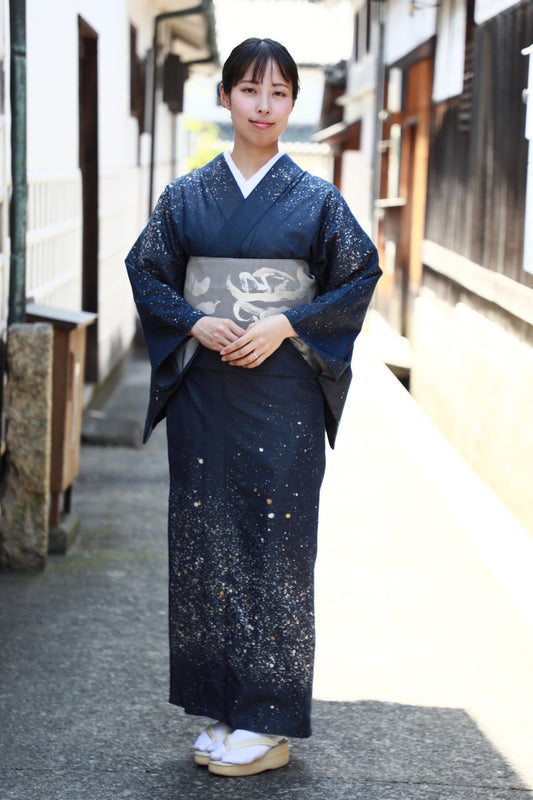
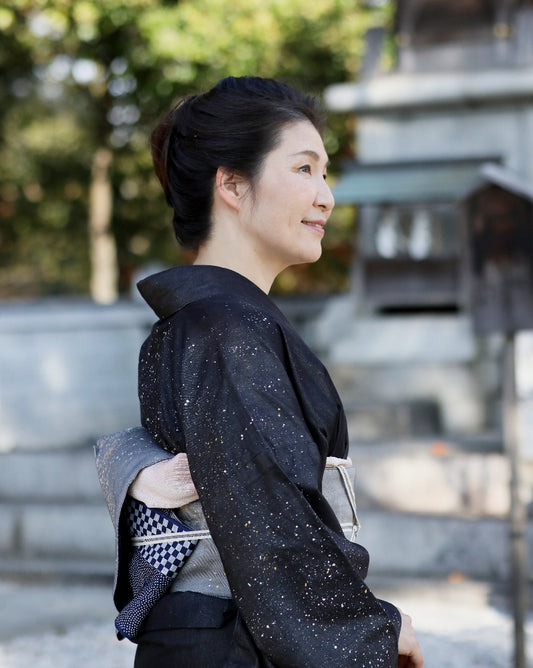
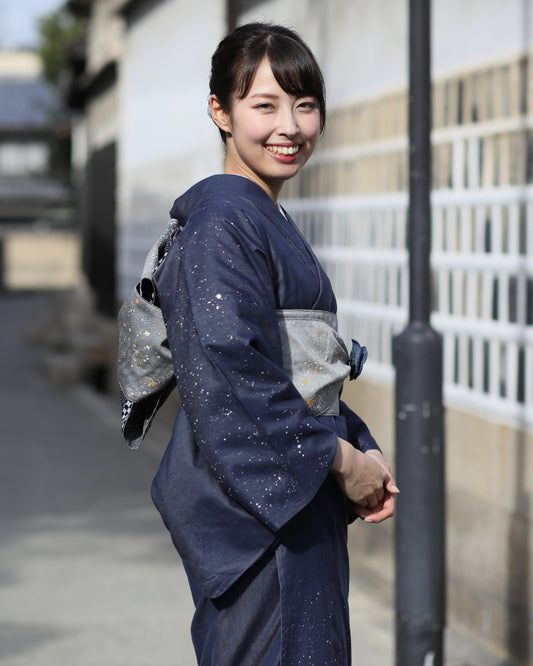
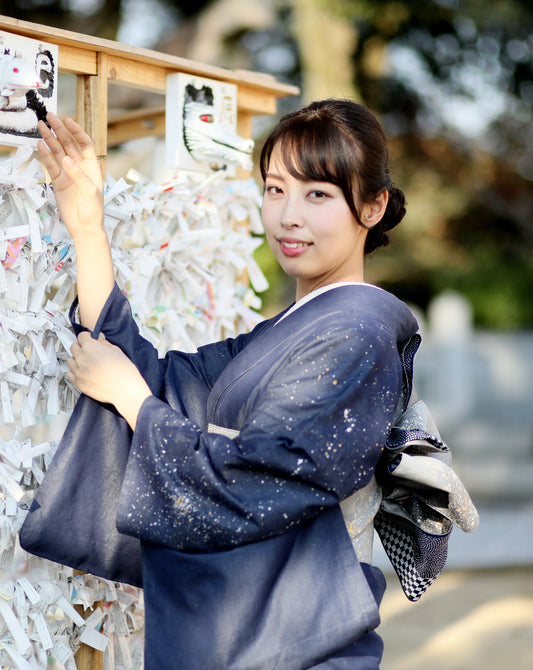
Pairing the soft, gentle impression of an antique kimono with a contemporary obi instantly gives the outfit a more polished, sophisticated feel.
Choose a modern obi
・A geometric or abstract-patterned obi creates an appealing mix of eras.
・Monochrome or metallic-toned obi also complement the softness of an antique piece beautifully.

Try a different knot
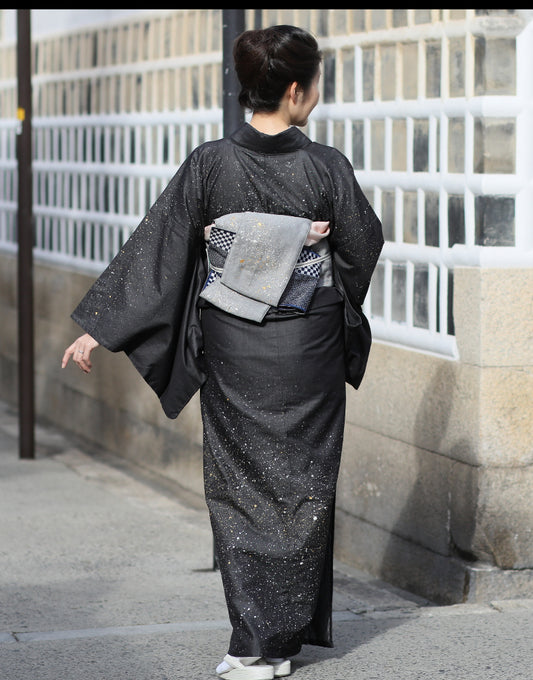
・Rather than a traditional knot like fukura-suzume (a full, decorative "puffed sparrow" knot), a simpler kaku-dashi or standard otaiko knot gives a more grown-up feel.
・Keeping the obijime (the cord tied over the obi) and obiage (the sash tucked above the obi) understated helps keep the whole outfit clean and cohesive.
Bring in the Present Through Accessories
Adding modern accents through accessories raises the overall style without losing the character of the antique kimono.
・Choose simple, understated zōri (traditional kimono sandals) and bags that let the antique pattern take center stage.
・An obidome (a decorative clasp on the obijime) in a modern material like glass or brass adds a subtle contemporary touch.
・Simply switching to a lace or embroidered han-eri (the collar worn under the kimono collar) harmonizes beautifully with the softness of an antique piece.
Advanced wearers enjoy playing with this contrast between old and new as part of the coordination itself.

Softening the "Datedness" Through Color
Antique kimono have a distinctive color palette, and how you handle color in the obi and accessories can completely change the impression.
Keep tones aligned
Building the whole outfit around a single color family keeps the vintage quality from feeling dated, and gives the look real elegance instead.
Example: a mustard-yellow kimono × a beige obi × pale gray accessories
Add a single accent color
For a muted, dusty-toned kimono, a vivid obijime or obiage can add just the accent needed to feel modern.
Example: a single pop of deep crimson, turquoise, or lilac

Dressing for the Occasion
Part of the appeal of antique kimono is choosing the right occasion for them.
・Theater or art events: pair with a modern-patterned obi for an artistic feel.
・Cafés or walking around town: dress it down with a cotton obi.
・Formal occasions: pair with a high-quality fukuro obi (a formal, double-woven obi) and keep the colors understated.
Simply changing your accessories to suit the occasion can give the exact same kimono a completely different feel each time.

In Summary: Bringing Old Beauty into the Present
An antique kimono is far more than just "an old kimono" — it's a work of art passed down across generations.
Pairing it with a modern sensibility in your choice of obi and accessories only brings out that beauty even more.
The secret to advanced coordination isn't hiding the age of the piece — it's making the most of it.
Wear the texture of another era while still expressing a beauty that's entirely your own, right now.
Pairing an antique kimono with a heavy fukuro obi and a formal otaiko knot can sometimes end up aging the whole look a bit more than intended.
In that case, a hanhaba obi (a narrower, casual obi) is a great alternative.
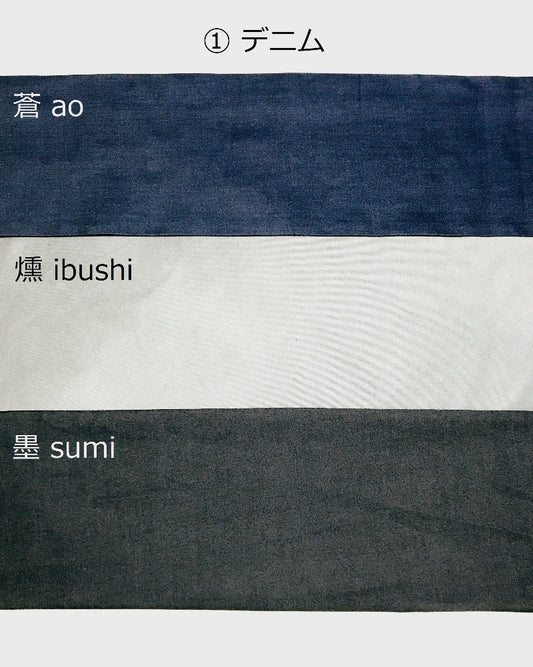
Here, we introduce obi featuring geometric patterns, colors, and materials that add just the right contemporary touch.
We hope you'll take a look.