Dressing to Shine in Formal Settings
A kimono worn in a formal setting reveals a person's sense of elegance more clearly than almost anything else.
The more advanced the wearer, the more they value formality and harmony over sheer glamour.
Here, we'll cover the key points for elevating your presence at formal occasions like weddings, ceremonies, and parties.
Understanding the Basics of Formal Dress
Formality means "dressing with respect for the occasion"
Formal kimono are, at their core, a way of showing respect for the setting you're in.
The classic formal kimono types include kuro-tomesode, iro-tomesode, hōmongi, tsukesage, and iro-muji.
Level of Formality Kimono Type Typical Occasion
Highest Kuro-tomesode (married women) Weddings, official ceremonies
High Iro-tomesode Weddings, ceremonies
Mid-level Hōmongi, Tsukesage Parties, celebrations
Understated Iro-muji (with family crests) Tea gatherings, dinners, award ceremonies
Knowing when to reach for each level — depending on whether you're the guest of honor or simply a guest, and whether it's a daytime or evening event — is part of an advanced wearer's judgment.

Shaping Elegance Through Obi and Accessories
Choosing the obi
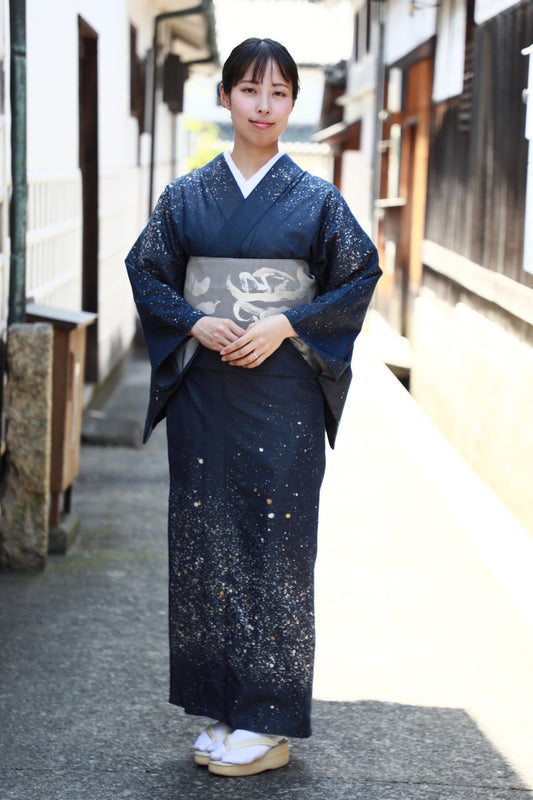
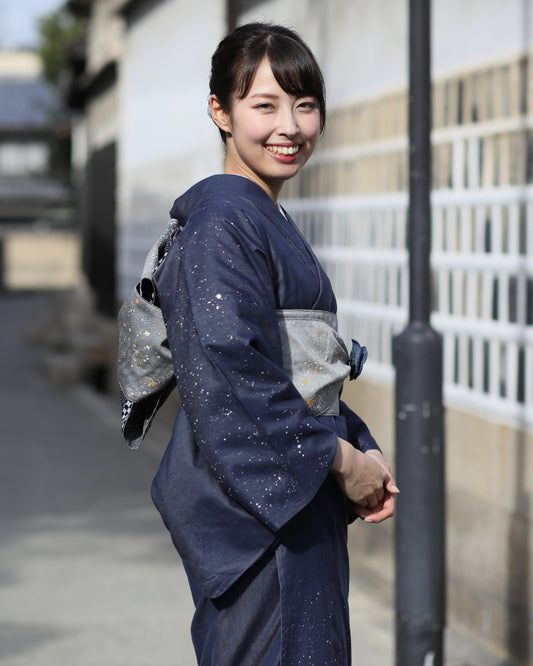
A fukuro obi (a formal, double-woven obi) is the standard choice for formal occasions. For celebratory events like weddings, a gorgeous fukuro obi with gold or silver thread works beautifully.
For ceremonies and official events, a woven obi with more restrained shine keeps things elegant.
The key question is whether the obi harmonizes with the kimono without overpowering it.
Staying within the same color family, varying only the depth of shade, naturally keeps the whole outfit at the right level of formality.
Obijime and obiage
For formal settings, choose clean, refined colors — white, silver, pale pink, or light blue.
A braided-cord obijime (the cord tied over the obi) and an obiage (the sash tucked above the obi) in rinzu (a glossy silk damask) or chirimen both elevate the level of formality.
As with everything else, restrained shine in your accessories is the golden rule for advanced wearers.

Being Mindful of Season and Time of Day
The most advanced wearers pay close attention to both season and time of day.
Spring / autumn: soft, neutral tones like pale cherry-blossom pink, light wisteria purple, or beige work beautifully.
Summer: sheer fabrics like ro or sha keep the look light and airy.
Winter: deep colors and heavier fabrics bring a sense of composure.
As a general rule, daytime calls for paler, more understated colors, while evening calls for a bit more shine in the obi and accessories.
For an evening ceremony or party, gold, silver, or pearl-toned accents that catch the light beautifully are especially effective.
Perfecting the Details: Hair, Footwear, and Bag
In formal settings, it's the small details that determine how polished an outfit truly feels.
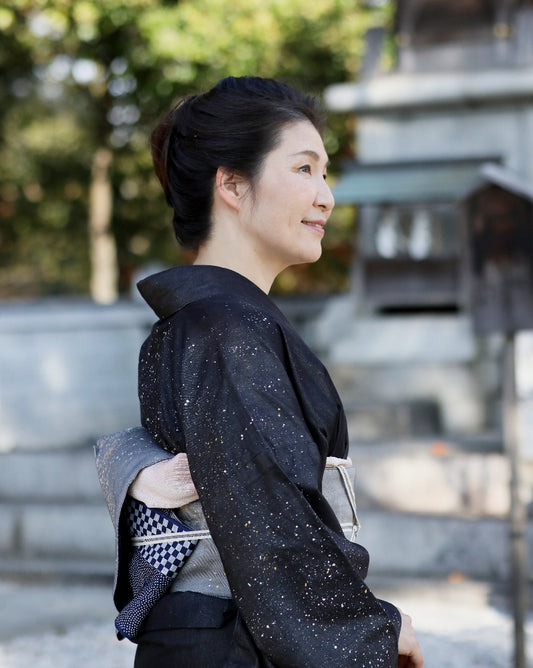
Hair: an updo keeps things clean and refined.
Avoid flashy accessories — a kanzashi (a traditional hair ornament) or comb, used elegantly, is enough.
Zōri: choose formal zōri (traditional kimono sandals) in white or pale gold. Avoid excessive height and keep things refined.
Bag: match the texture to your obi. A woven bag with gold or silver thread is ideal.
Paying attention to a sense of "clean, understated beauty" in every detail lets real elegance shine through the whole outfit.

Colors and Patterns That Shine in Formal Settings
Advanced wearers aim to impress through refined elegance, not flashiness.
Color: understated, harmonious tones like pale wisteria purple, ash pink, pale gold, or deep green.
Pattern: classic motifs — folding fans, pine-bamboo-plum (shō-chiku-bai), tortoiseshell (kikkō), or floral roundels (hanamaru-mon) — that carry a real sense of tradition.
Overall balance: the golden rule is that the pattern should never outshine the obi.
You don't need to look flashy — attention to detail is what naturally conveys real formality.
Posture and Movement Are Part of Formal Dress Too
A formal kimono outfit is only complete alongside the way you carry yourself.
Keep in mind the posture and walk that make a kimono look its most beautiful:
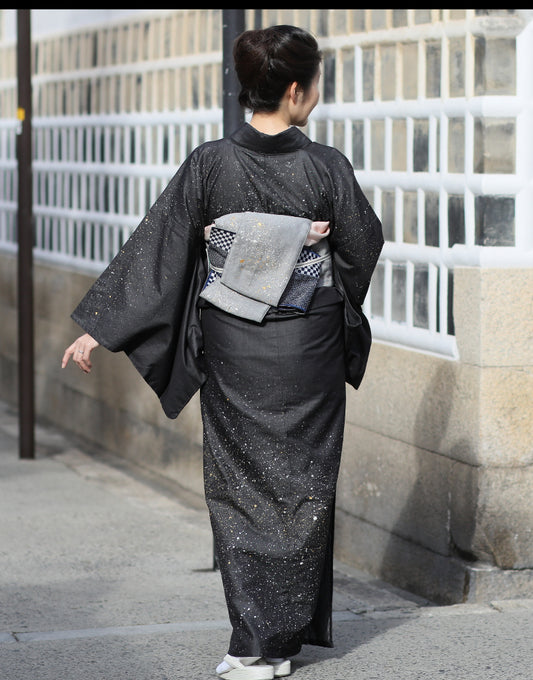
Keep your back straight, with your gaze slightly forward.
Take small steps, and keep your knees together.
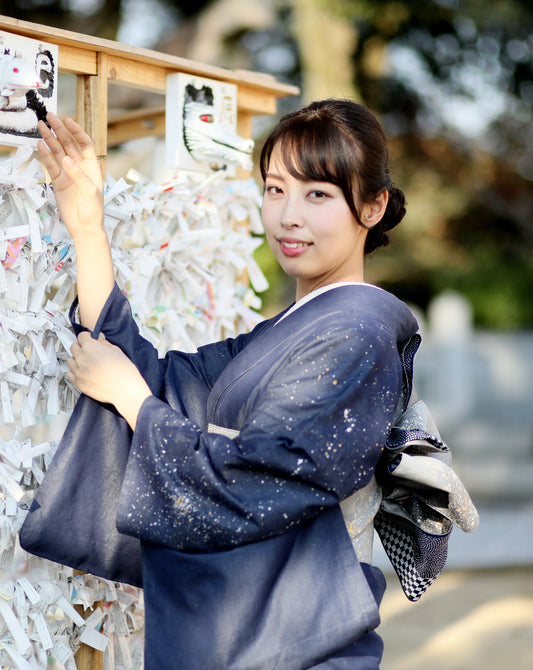
Gently hold your sleeve in place as a natural gesture.
Once these movements come naturally, your kimono carries what might be called a "quiet glamour."

In Summary: A Glow That Lives Within Restraint
A kimono outfit that truly shines in formal settings strikes a delicate balance between glamour and elegance.
Paying attention to color, fabric, accessories, and posture — all together — creates a beauty that comes through from within.
The more advanced the wearer, the more they choose to let their presence speak for itself rather than through overt display.
That, truly, is the secret to formal elegance.
After a lovely formal event, you might run into old friends you haven't seen in a while and decide to head to a café to catch up a little longer.
Being able to quickly switch your obi to suit the more relaxed setting — that's the mark of a truly advanced kimono wearer.
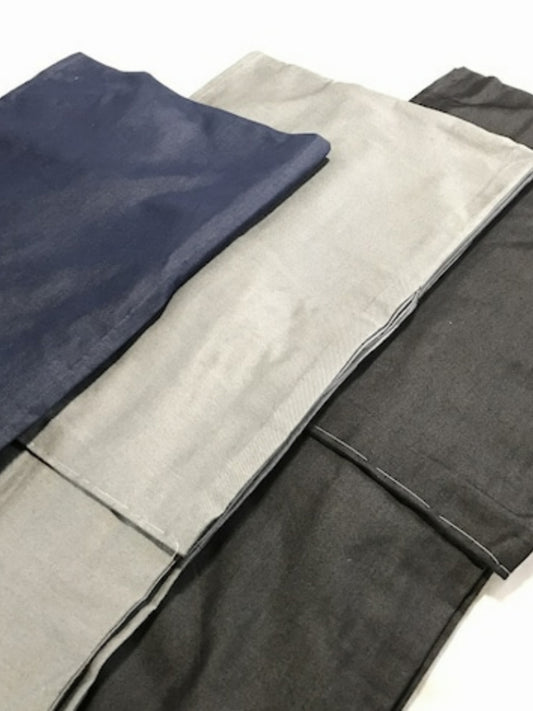
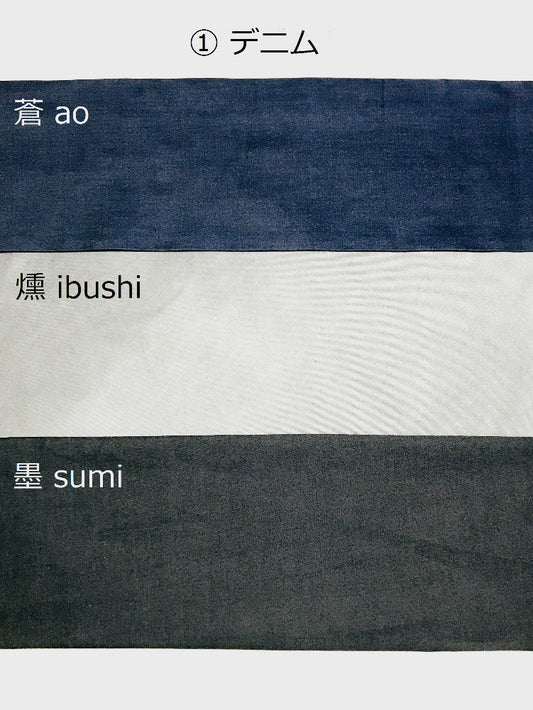
An elegant, high-quality hanhaba obi (a narrower, casual obi) with a refined pattern comes in especially handy for moments just like that. Here, we'd love to introduce a few obi we think would suit an advanced wearer like you.

We highly recommend this obi for you, the seasoned wearer.