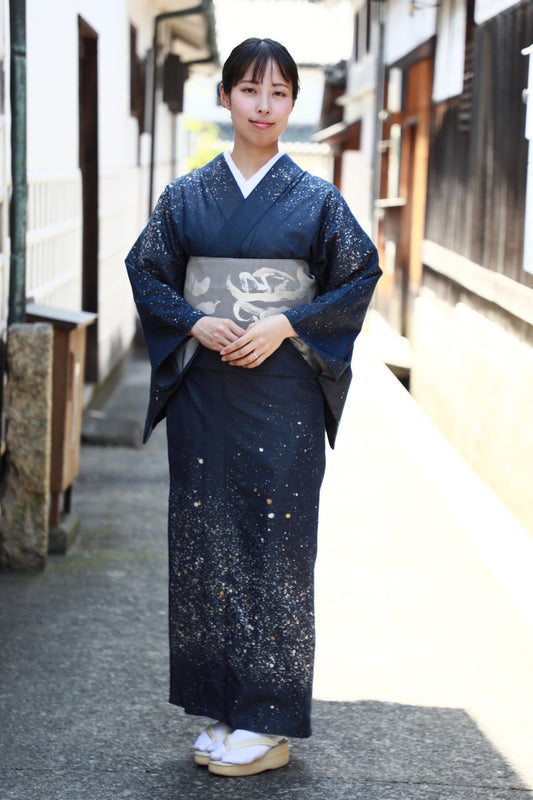
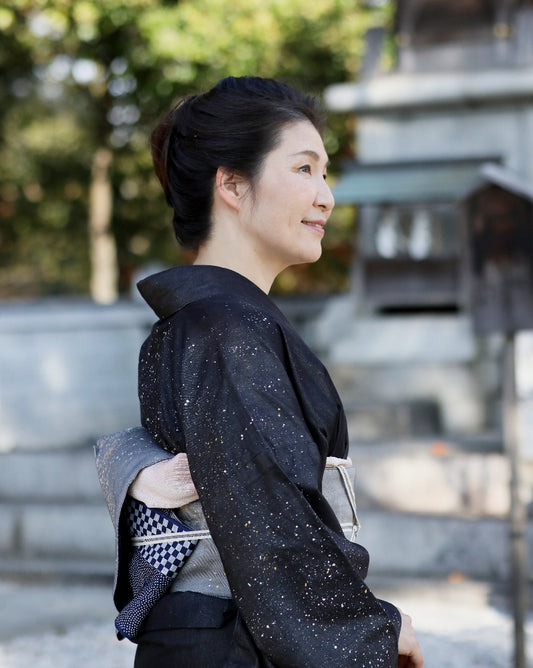
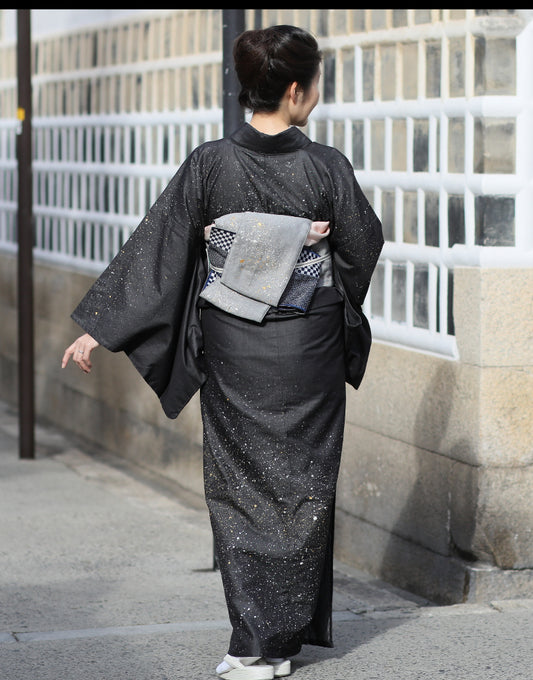
Wool Kimono
Wool kimono became a popular everyday staple starting in the early Shōwa era.
Cheaper and softer than silk, they were valued for staying warm even as an unlined (hitoe) garment, and were commonly worn from autumn through winter and into early spring.
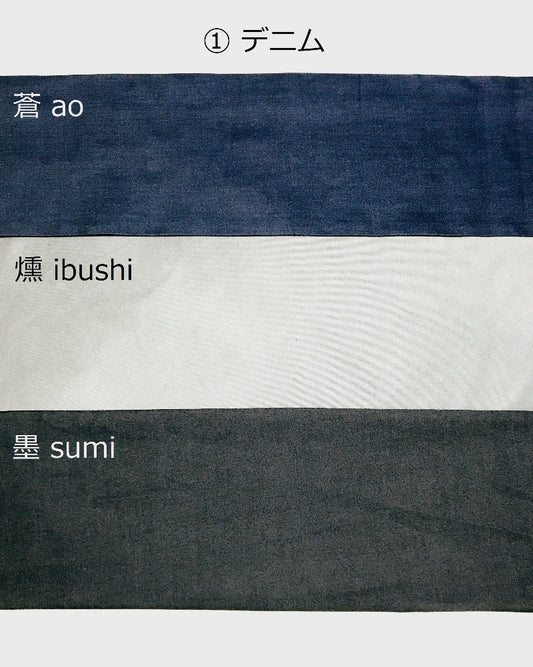
Another part of their appeal is the wide range of patterns and colors available.
That said, since wool is an animal fiber, it's more vulnerable to insect damage, and it can shrink or lose its shape if washed or stored incorrectly.

Here, we'll walk through how to keep an unlined wool kimono beautiful for years to come, covering care after wearing, washing, drying and finishing, storage, and everyday precautions.
Care After Wearing
Wool kimono are convenient for everyday wear, but a little extra care after each wear makes a big difference to its lifespan.
Let it air out
After wearing, hang the kimono on a kimono-specific hanger to let it air out.
Wool absorbs moisture readily, and leftover sweat or rain can lead to odor or mold.
As a rule, hang it somewhere shaded and well-ventilated, out of direct sunlight, for one to two hours.
Brush away dust
Wool picks up static easily, which means it also attracts dust.
Gently brushing the surface with a soft, kimono-specific brush keeps it clean.
Check for wrinkles
Wool wrinkles easily, though hanging it up often lets the wrinkles smooth out naturally.
For more stubborn wrinkles, a steam iron (covered below) can help.
How to Wash It
Unlike cotton, wool kimono require extra care when it comes to washing at home.
Finished, tailored pieces are especially prone to shrinking or losing their shape, so full cleaning or dry cleaning at a specialty shop is generally the safest choice.
That said, some wool kimono made for everyday wear can be hand-washed at home.
Dry Cleaning
The safest option is a cleaner experienced with Japanese garments.
Avoid washing precious patterned or higher-quality wool kimono with water at home.
Hand Washing at Home
An unlined (hitoe) piece can generally be hand-washed.
Fill a sink or a large basin with lukewarm water (no warmer than about 30°C / 86°F) and dissolve in a wool-safe neutral detergent.
Stick to press-washing and gentle swishing, and never rub or knead the fabric.
If you use a washing machine
Fold the kimono flat and place it in a flat, square mesh laundry bag.
If your machine has a wool-safe or delicate/dry cycle, washing it alone in the bag may work — but because wool shrinks easily, this isn't recommended for a new or particularly valued piece.
Rinsing and spinning
Rinse carefully using a pooled-water rinse.
A short spin — about 30 seconds — is enough; a longer spin cycle can cause wrinkling or shrinking.
Drying and Finishing
How you dry and finish your wool kimono after washing is crucial to maintaining its beauty.
Shade Drying
Hang the kimono on a kimono-specific hanger, reshaping it as needed, and dry it away from direct sunlight.
Iron while still slightly damp
Ironing wool while it's still slightly damp smooths out wrinkles easily without damaging its texture.
Set the iron to a medium temperature (around 140–160°C / 285–320°F) and always use a pressing cloth.
Using a bit of steam and holding the iron just above the fabric, rather than pressing down hard, gives a beautiful finish without damaging the fibers.
Dry it completely
Don't fold the kimono away right after ironing — hang it up for several more hours to dry completely.
Leftover moisture can lead to odor or insect damage.
Storage
Protecting a wool kimono takes some extra care in how it's stored.
Wrap it in tatōshi paper
Like silk and cotton kimono, wool kimono should be wrapped in tatōshi paper for storage.
This helps guard against humidity and dust, and also helps prevent insect damage.
Using mothballs / insect repellent
Because wool is especially prone to insect damage, using an insect repellent is essential.
When placing it in a chest or storage case, position it so it doesn't touch the kimono directly, and stick to a single type of repellent so the chemicals don't mix.
Where to store it
A kiri (paulownia wood) chest is ideal, though an oshiire (a Japanese-style storage closet) or regular closet works too.
Since humidity can build up in these spaces, use a dehumidifying agent and ventilate the space periodically.
Airing out (mushiboshi)
Airing the kimono out in the shade for about half a day, once or twice a year on a dry, sunny day, helps prevent moisture buildup, mold, and the risk of insect damage.
Everyday Precautions
Wool kimono are easy to enjoy as everyday wear, but a few precautions help it last even longer:
・While eating and drinking: oil stains and food stains are hard to remove from wool, so cover your lap with a napkin or furoshiki (a Japanese wrapping cloth) while eating.
・On rainy days: wool is sensitive to water, so wear a rain coat. If it does get wet, wipe off the moisture with a dry cloth right away and air it out in the shade.
・Perfume and hair products: these can absorb into the fibers and leave a lingering scent, so apply them before getting dressed.
・Layering: since wool retains heat well, pairing it with a thinner juban (an underlayer worn beneath the kimono) helps keep you comfortable.
The Appeal of Wool Kimono and Why Care Matters
The biggest appeal of a wool kimono lies in its ease as everyday wear and its warmth.
It's often noted as a good option for the colder months — not as expensive as silk, but warmer than cotton or a yukata (a casual summer kimono), and easy to work into daily life.
Understanding its weaknesses — susceptibility to insects and shrinking — and giving it the right care lets you enjoy a wool kimono for a long time to come.
In Summary
Wool kimono are easy, everyday pieces, but a few things deserve attention:
・Always air it out and brush away dust and moisture after wearing.
・Cleaning is generally best left to a specialist; if washing at home, stick to press-washing and a short spin.
・Dry in the shade and iron while slightly damp to prevent wrinkles and preserve the texture.
・Use tatōshi paper and insect repellent together during storage, and don't forget humidity control.
Warm despite being unlined (hitoe, without a lining) — wool kimono have a texture that feels oddly nostalgic the moment you touch it, though they've become harder to find lately.
That's likely because so many easier-care fabrics have come along since.
We hope you'll continue to enjoy kimono made from wool and other easy-care fabrics alike, and keep finding new ways to make kimono part of your everyday life.

On this site, we introduce "Silk Denim Kimono" as one such easily manageable kimono.
Please take a look.