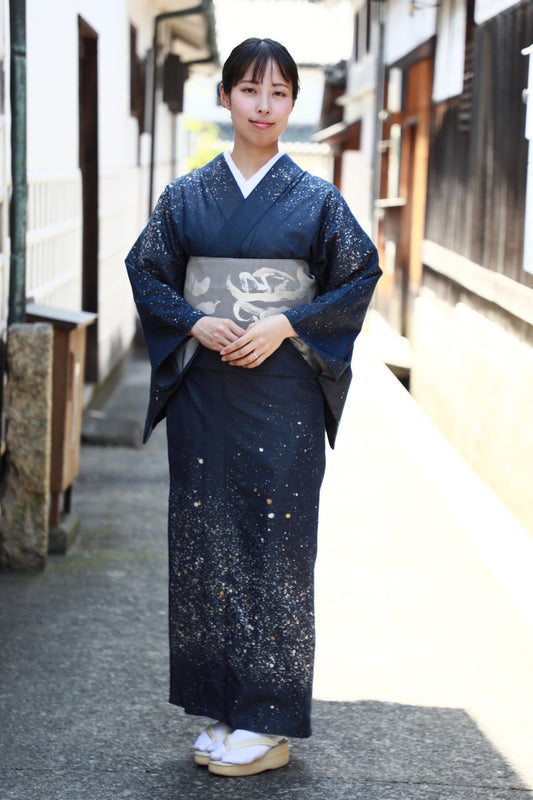
Cotton-Linen Blend Kimono
Fabric blending cotton and linen has long been called "the original hybrid fabric," used widely not just in traditional Japanese dress but in everyday and summer clothing more broadly.
It combines the softness and moisture absorption of cotton with the crisp, breathable feel of linen, which means a kimono or yukata (a casual summer kimono) made from this blend can be worn comfortably across a long stretch of the year — from early summer through the height of summer and into late summer.
Compared to pure cotton or pure linen, the exact ratio of the blend determines how the kimono performs across different settings — which is exactly why it's worth understanding both fibers' characteristics to give it well-balanced care.
To help you enjoy a cotton-linen kimono for years to come, here's how to keep it looking its best.

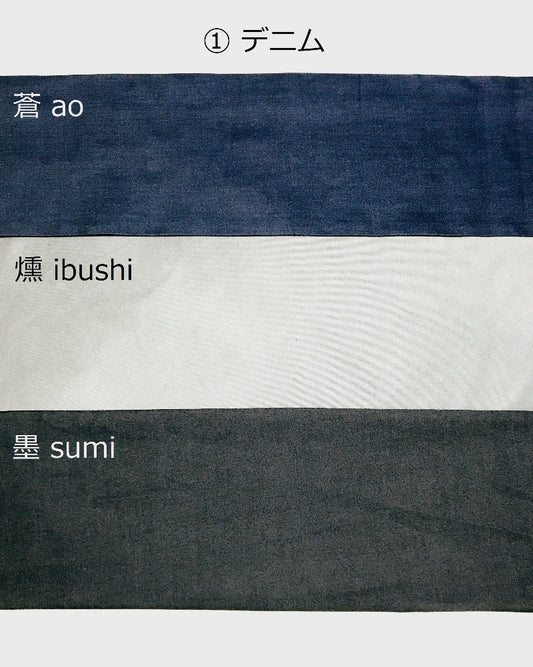
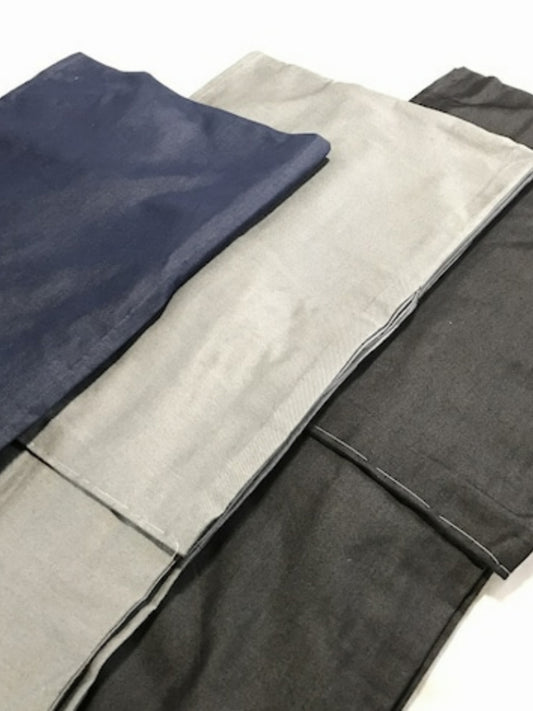
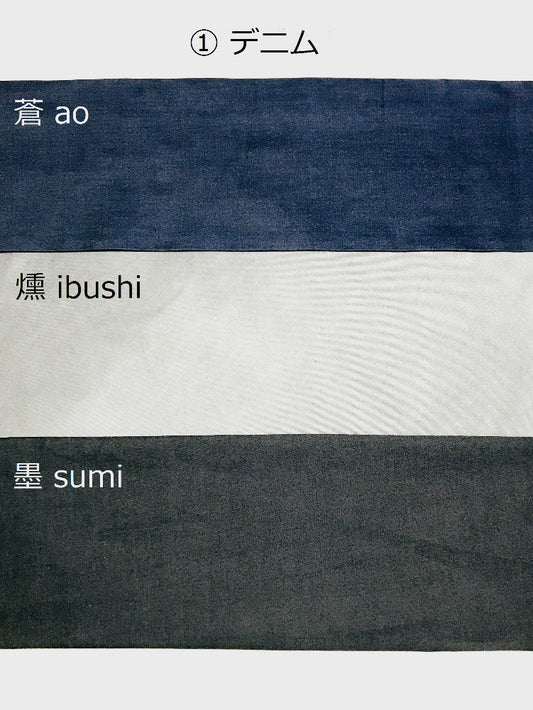
Since cotton-linen blends come in many varieties, we'll use one representative example here: a kimono tailored from a carefully selected cotton-linen fabric woven in Okayama.
We'll cover care after wearing, washing, drying, ironing, storage, and everyday precautions in that order.
Note: our fabric is produced by SHOWA Co., Ltd. in Kojima, Kurashiki City, Okayama Prefecture.
Care After Wearing
After taking off a cotton-linen kimono, resist the urge to fold and put it away right away — the first step is letting the moisture out.
Because the fabric combines cotton's tendency to absorb sweat with linen's resistance to trapping humidity, hanging it somewhere well-ventilated overnight lets any moisture still in the fibers release naturally.
Since this fabric is worn mostly in summer, sweat tends to build up under the arms and along the back, and leaving it unchecked can lead to odor or staining.
Lightly pat away any dust, and smooth the surface with a soft brush if needed.
Washing
Because a cotton-linen blend holds up to water reasonably well — like cotton and linen individually — it can typically be hand-washed at home, or machine-washed in a mesh bag on a gentle cycle.
Keep the following in mind:
・Use a neutral detergent — alkaline detergents can damage the linen fibers.
・Keep the water temperature below about 30°C (86°F); higher heat can cause shrinking.
・Wash it on its own to prevent color transfer, especially important while the piece is still new.
・Keep the spin cycle short — about 30 seconds — to prevent the linen fibers from becoming overly stiff.
For localized stains, gently dabbing the spot with a damp towel works well. When treating a stain, avoid scrubbing hard so you don't damage the fabric.
How to Dry
Drying in the shade is the standard approach after washing.
Direct sunlight can stiffen the linen fibers and speed up fading, so avoid it.
Hang it on a hanger somewhere well-ventilated indoors or under an eave.
A wide, kimono-specific hanger is ideal for keeping the shape from distorting.
Lightly patting out wrinkles by hand before hanging it up also makes the ironing step easier later on.
Ironing
Because cotton-linen fabric wrinkles easily, ironing is an essential step.
That said, there's no need to press out linen's crisp texture entirely — in fact, leaving some of that natural texture actually enhances the cool, breezy feel of the outfit.
Use a medium temperature, around 140–160°C (285–320°F).
Iron from the reverse side with a pressing cloth to prevent shine.
A little moisture — from a spray bottle or light steam — softens the fibers and makes ironing more effective.
If the wrinkles are stubborn, don't put it away right after ironing — hang it up for a few minutes to let the heat dissipate for a more stable finish.
Storage
Ventilation and humidity control are the two keywords for storage.
Since this fabric combines hemp's moisture absorption with cotton's heat retention, trapped humidity can lead to mold or yellowing.
Ideally, wrap it in tatōshi paper and store it in a kiri (paulownia wood) chest.
If storing it in a closet, use a non-woven fabric cover that still allows moisture to escape.
A dehumidifying agent is a good idea; an insect repellent can be used alongside it too, but make sure it doesn't touch the fabric directly.
For long-term storage, taking it out and airing it on a well-ventilated day about once a year is a good extra step.
The Benefits and Considerations of a Cotton-Linen Blend
A cotton-linen kimono goes beyond just being an "easy summer kimono" — it offers a few distinct qualities:
・It combines the softness of cotton with the crisp texture of linen, offering both a cool feel and a comfortable fit against the skin.
・It's relatively easy to wash, making it a stress-free choice for everyday wear.
・It's often tailored as an unlined (hitoe) piece, wearable from early spring through early autumn.
That said, there are a few things worth keeping in mind:
・It wrinkles easily, so ironing after each wash is essentially required.
・Color fading and shrinking can't be fully avoided, so extra care is needed especially early on.
・It doesn't have the sheen or formality of silk, so it isn't suited to formal occasions.
In Summary
A cotton-linen kimono is a traditional yet practical fabric — the original hybrid, in a sense — still loved by many today.
Its appeal lies in the way it perfectly balances the reassuring comfort of cotton with the refreshing quality of linen.
Keeping a few basics in mind is enough to enjoy it comfortably for years to come:
Dry in the shade
Use a neutral detergent
Keep the spin cycle short
Iron at a medium temperature
Store somewhere well-ventilated
Compared to a synthetic-fiber kimono, a cotton-linen piece stands out for how naturally it fits into everyday life while still offering real texture and quality.
Get the hang of its care routine, and enjoy everything summer style has to offer.
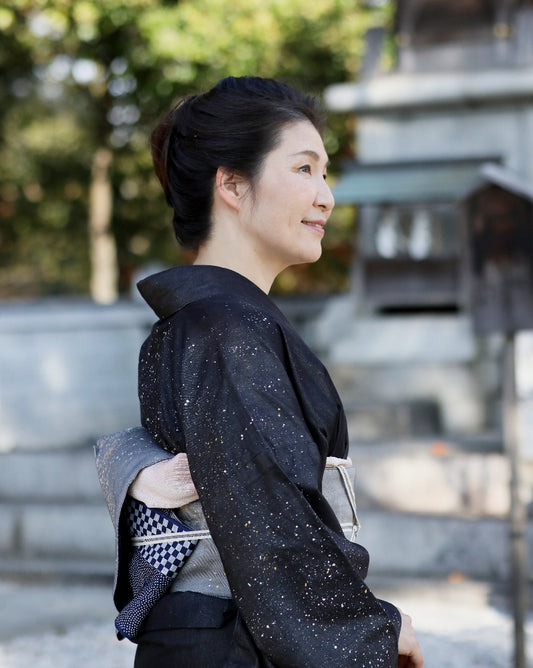
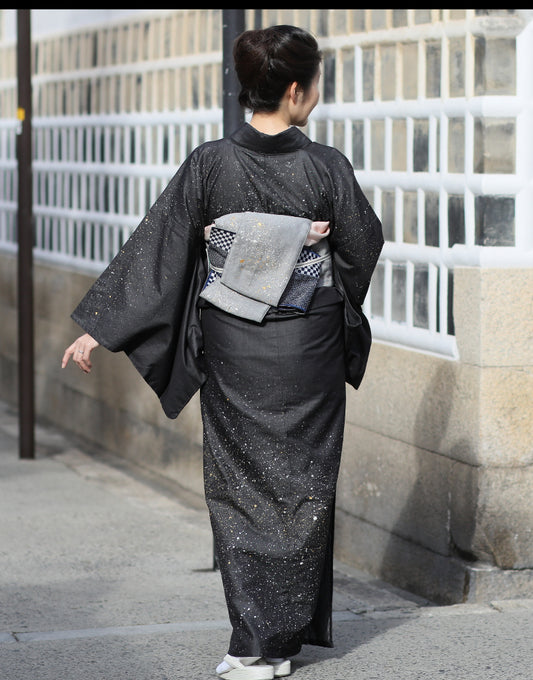
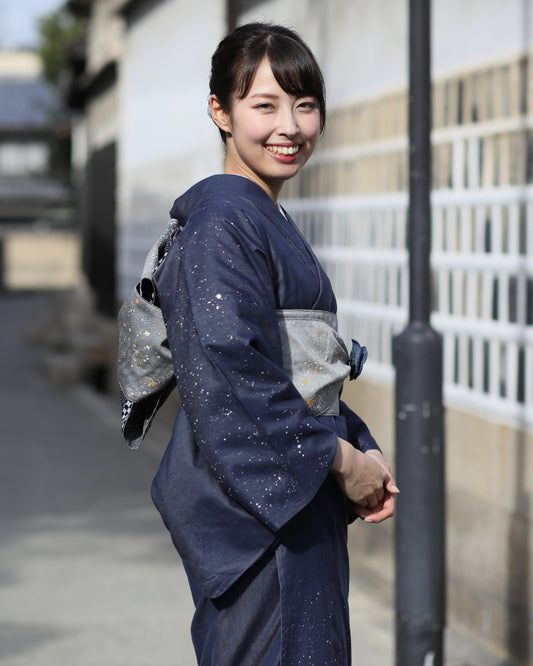
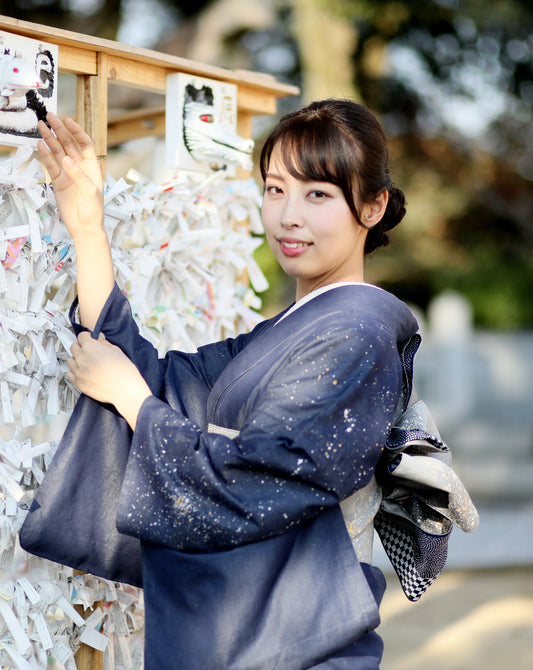
Here, we introduce stylish and durable cotton and linen kimonos.
Kojima, Kurashiki City, Okayama Prefecture, is a world-renowned denim town.
This kimono is made using cotton and linen fabric woven there.
Originally, this cotton and linen fabric was woven for making shirts and other garments, so it possesses durability that can withstand vigorous movement.
Traditional hybrid material woven using modern denim manufacturing techniques.
We hope you enjoy wearing a piece of history that connects to the present.