KIMONO Terrasse
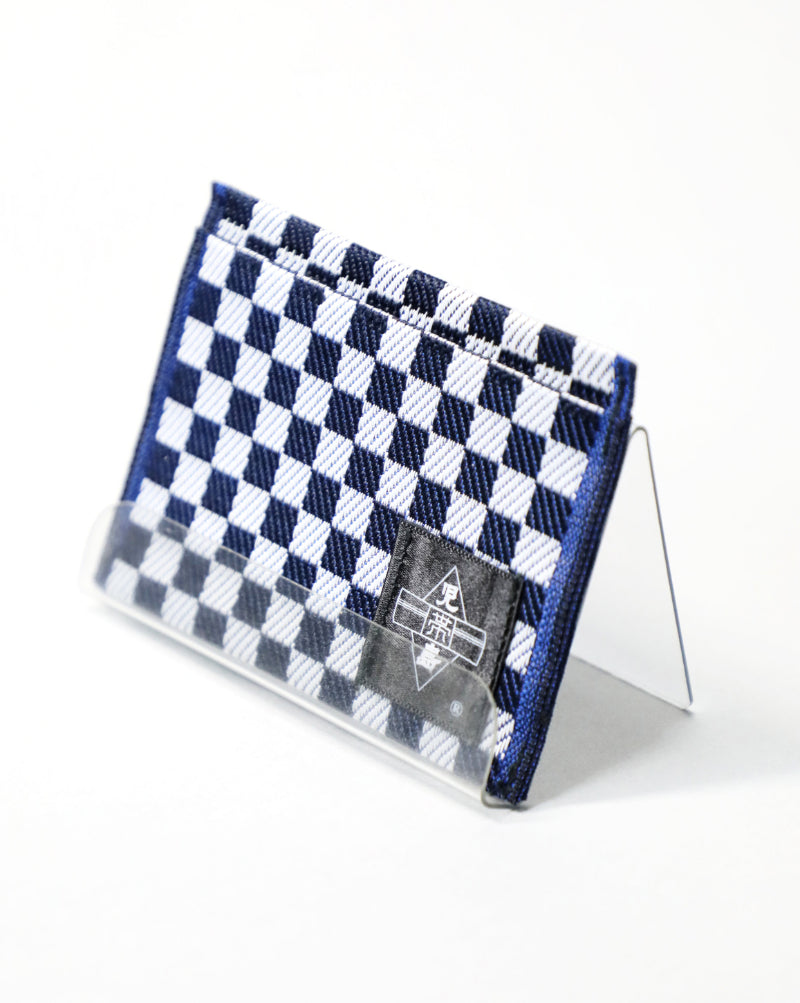
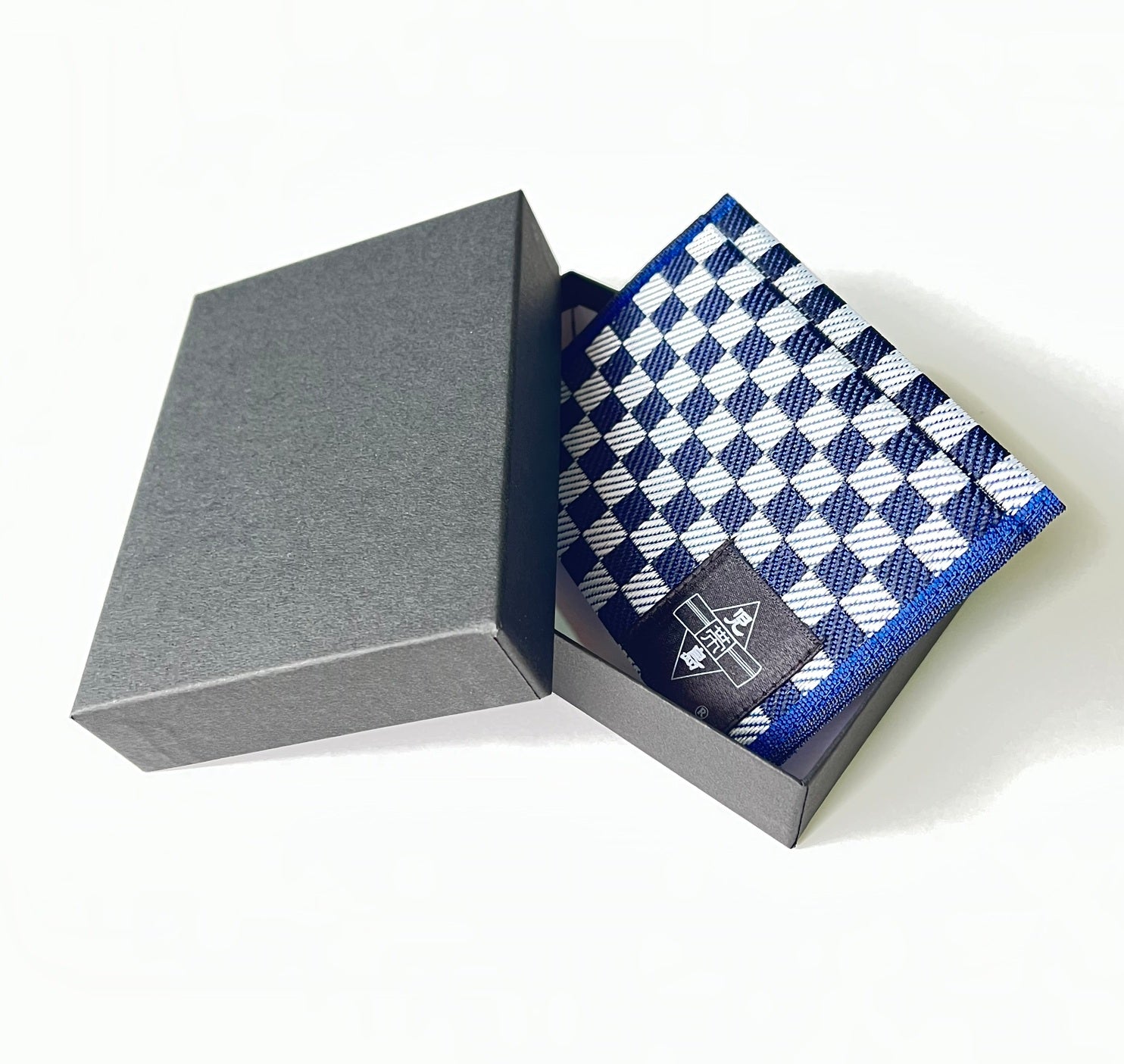
Tatami Fuchi Card Case
Tatami Fuchi Card Case
Couldn't load pickup availability
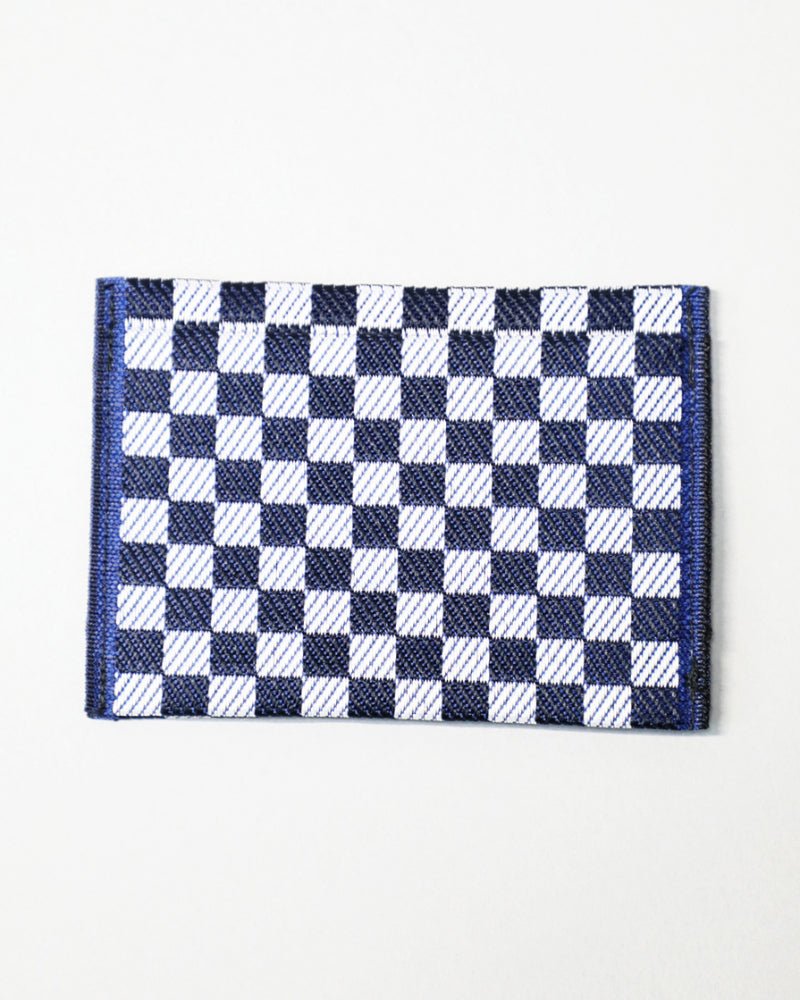
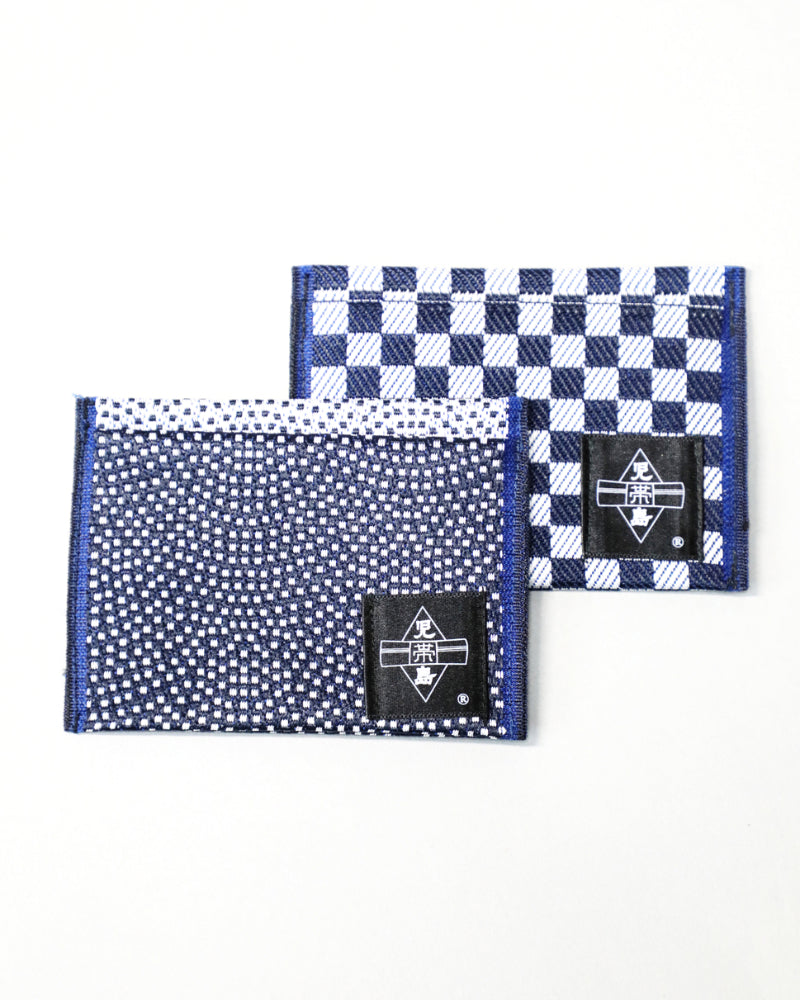
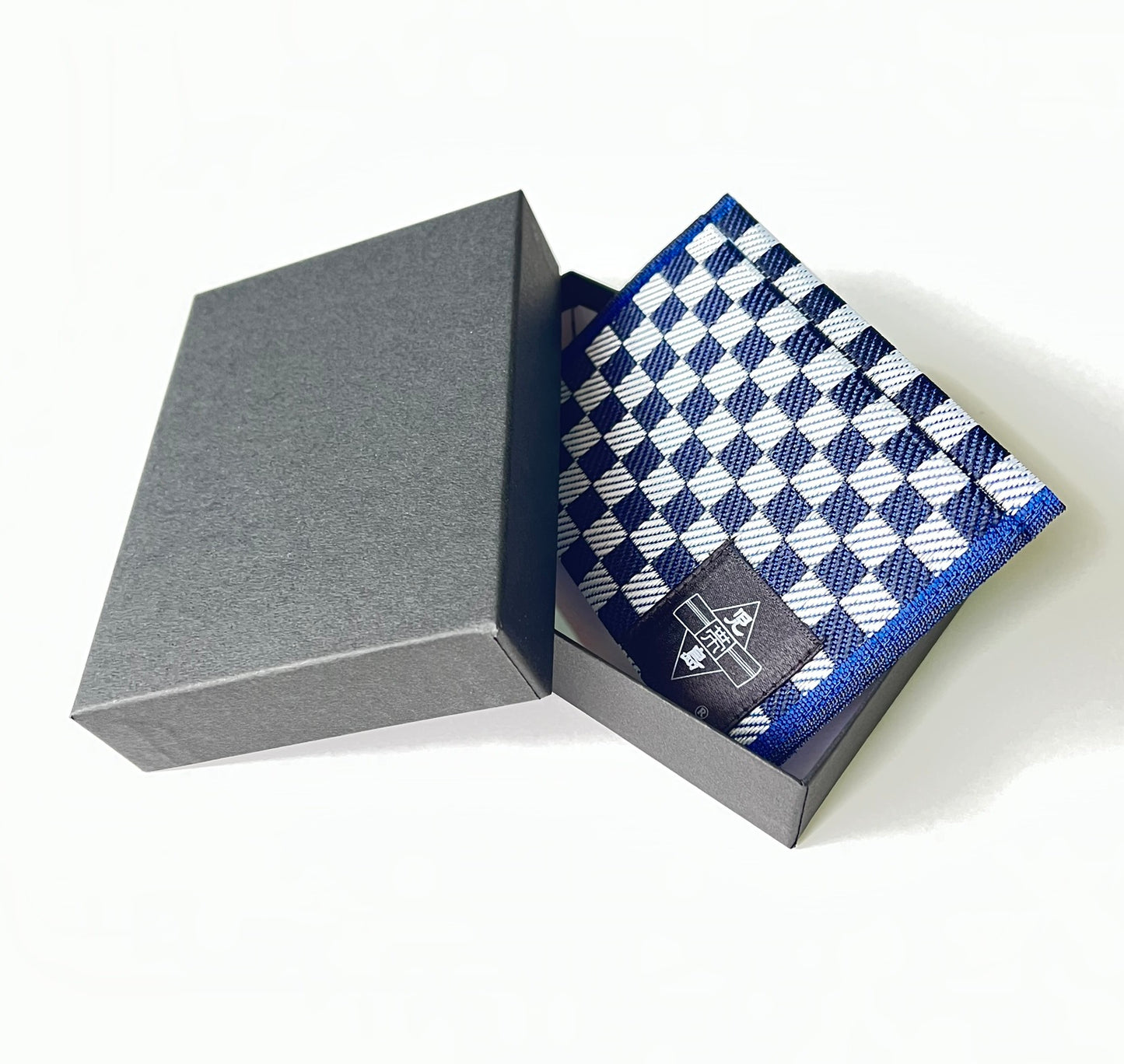
Tatami-beri Card Case
'Ichimatsu'
Material: Polyester (tatami-beri)
Weight: Approx. 10g Size
: Approx. 80mm x Approx. 110mm x Approx. 5mm
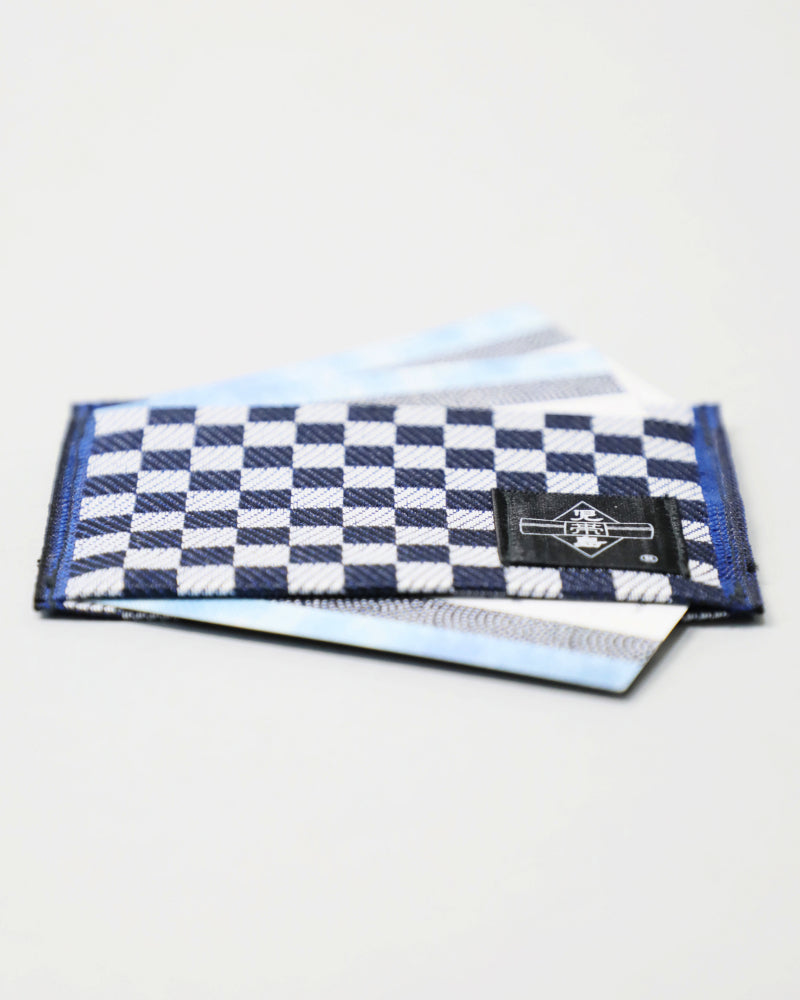
Storage capacity: 3 free pockets
Manufactured: Made in KOJIMA (purely Made in Japan)
・IC card compatible・
A sister product to the Tatami-beri business card holder.
・No gusset
・Free pockets are located on the front, back, and bottom.
[Shipping]・After payment confirmation,
we will ship in approximately 1 week.
*The maximum stock quantity varies depending on usage.
*Unauthorized reproduction or processing of product images on the product page is prohibited.
*Product images may differ from the actual color.
※The gift box in the photo is not included. Only the card case is for sale.
Product Details
-Ichimatsu Tatami-Beri Card Case-
【About the Product】
The tatami-beri (tatami mat edging) used in the "Kojima Obi" is now available as a "card case".
It's incredibly light!
And durable!
Beyond its design, the uniqueness of the material can even spark conversation in business settings.
As a masterpiece born from Japan's proud culture, it is a popular choice for gifts, souvenirs, and prizes at golf tournaments.
【Product Features】
~What is Tatami-Beri~
It is a material attached to the long side of a tatami mat to protect and reinforce the tatami surface.
It also prevents wear and tear on the corners of the tatami and plays a role in "tightening" the gaps that tend to form when tatami mats are laid together.
Kurashiki City in Okayama Prefecture is famous as a production area, boasting about 80% of the national production.
The prototype of tatami mats was created 1300 years ago, and at that time, only high-ranking people were allowed to use them. The colors and patterns of the tatami-beri used for their edges also indicated social status.
In the past, the materials were cotton or hemp threads, but nowadays, synthetic fibers are the mainstream, and the variety of colors has greatly increased.
Therefore,
・Lightweight
・Durable
・Beautiful colors and patterns (color development)
These major characteristics are directly utilized in the "card case."
~Ichimatsu Pattern~
In the Edo period, this pattern became extremely popular among women after a Kabuki actor used it for his stage costume.
It is also called "arare" (hail) or "ishidatami" (stone pavement).
In ancient times, it was depicted on haniwa (clay figures) from the Kofun period.
The Tokyo Olympic emblem in 2020 (held in 2021 due to postponement) was also designed with the Ichimatsu pattern as its motif.
It is also referred to as "check" or "checkerboard pattern" overseas.
The continuous repetition of the same pattern carries the wish for "prosperity."
【Precautions】
Tatami-beri is a strong and durable material with tension.
Therefore, when putting it in a pocket or bag, there is a risk of scratching surfaces that it repeatedly comes into contact with.
Please be careful where the card case touches soft materials like cloth.
Although the material is water-resistant, it is not waterproof.
*It does not protect the cards inside.
Due to the slippery material, cards are very easy to remove.
*Please be careful not to drop items (cards) placed inside.

【A message from the owner】
Thank you for visiting our website among many others.
In Kojima, Kurashiki City, cotton has been cultivated for about 400 years, and it is now known as the "City of Textiles."
Today, it is a famous city that produces many textiles, including denim, tatami-beri, and sanada-himo.
The most famous among them is denim.
However, in terms of national production volume, "tatami-beri" stands out.
It boasts about 80% of the market share.
Tatami-beri was originally a building material,
but in recent years, it has been widely used as a material for handmade items such as coin purses, accessory cases, and bags.
This "card case" is also one such product.
However, what makes it different is that it uses the "leftover" tatami-beri from the production of our "Kojima Obi."
Our original product, the "Kojima Obi," uses denim, tatami-beri, and sanada-himo.
After using the required length for the obi, there is always some "leftover" material.
We thought it would be a waste to throw this away, which led to the creation of this product.
By utilizing everything without waste, we aim to create products that we can proudly present to tatami-beri companies and that align with SDG initiatives.