


KIMONO Terrasse
Tatami-beri Business Card Holder
Tatami-beri Business Card Holder
Couldn't load pickup availability
Tatami-beri Business Card Holder (Pure Insert)
'Shark'
Material: Polyester (tatami-beri)
Weight: Approx. 20g
Size: Approx. 80mm x 110mm x 13mm (folded)
Storage capacity: Approx. 50 business cards, 2 free pockets
Manufacture: Made in KOJIMA (Japan)
・A sister product to the tatami-beri card case
・With gusset・
The free pockets are on the left and right inside.
[Shipping]・
Shipping will be made approximately one week after payment confirmation.
* The upper limit of stock availability varies depending on usage.
* Unauthorized reproduction or modification of product images on the product page is prohibited.
* Product images may differ from actual colors.
* The cosmetic box in the photo is not included. Only the business card holder is for sale.


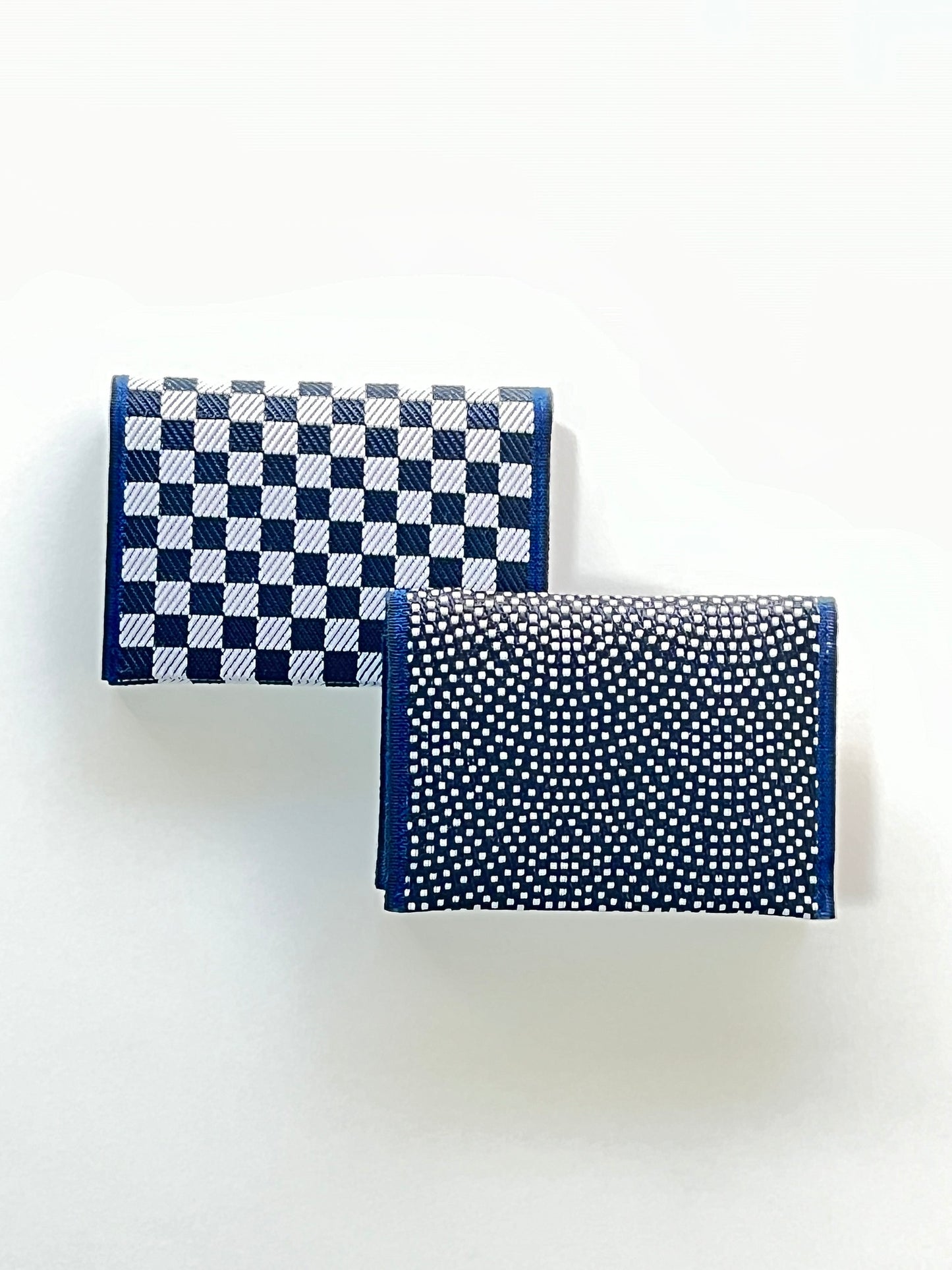
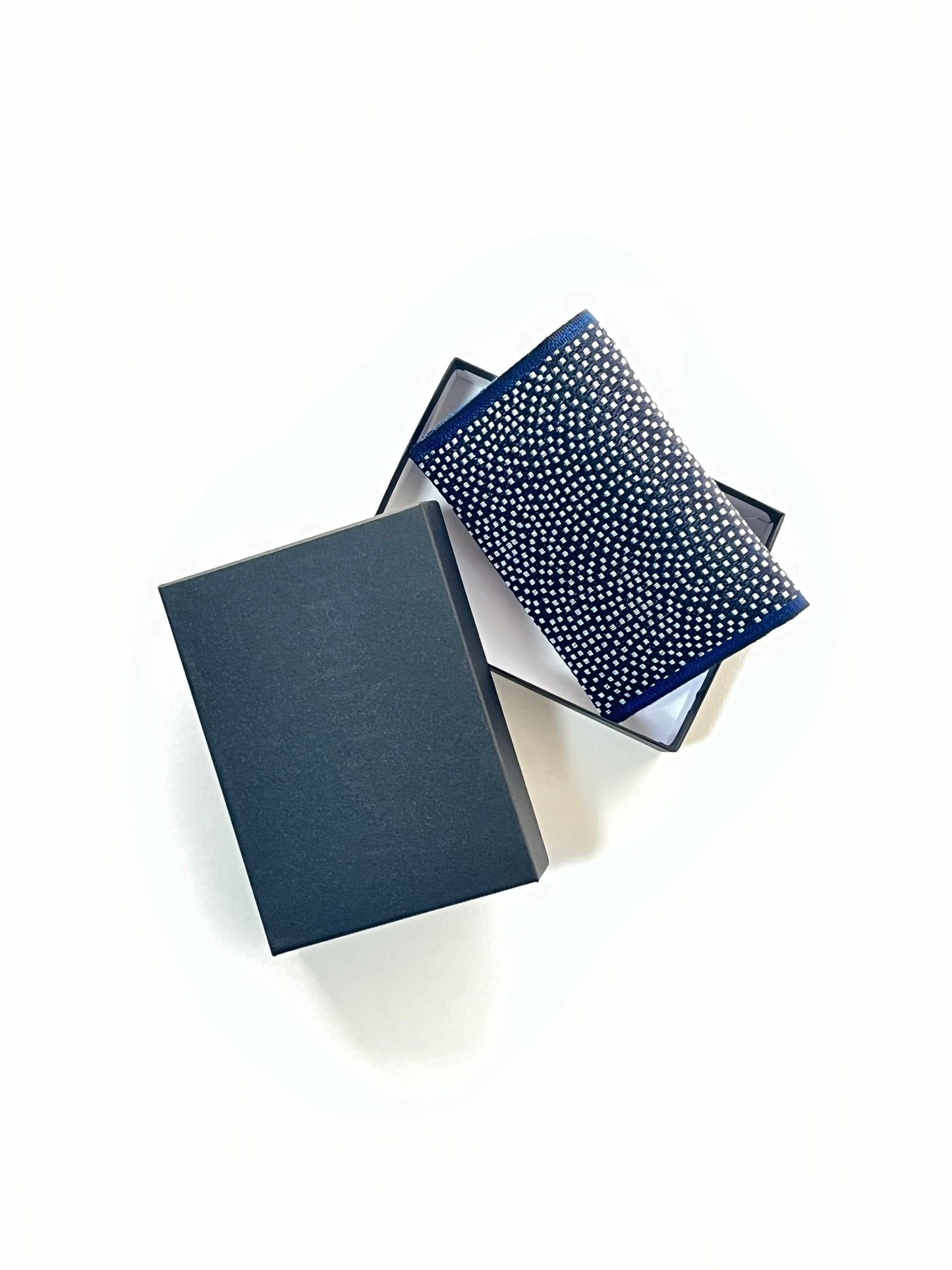
Product Details
-Same Tatamiberi Card Holder-
【About the Product】
The tatamiberi (tatami mat edging) used in the "Kojima Obi" has been repurposed into a "card holder."
It's incredibly lightweight!
And durable!
Beyond its design, the fascinating material can even spark conversation in business settings.
As a masterpiece born from a culture Japan boasts, it's also chosen for gifts, commemorative items, and golf competition prizes.
【Product Features】
~What is Tatamiberi?~
It is a material attached to the long side of a tatami mat to protect and reinforce the tatami surface.
It also prevents wear on the corners of the tatami and serves to "close" any gaps that tend to form when tatami mats are laid together.
Kurashiki City in Okayama Prefecture is famous as a production area, boasting approximately 80% of the national market share.
The prototype of tatami mats originated 1300 years ago, and at that time, only nobility were permitted to use them. The colors and patterns of the tatamiberi used on their edges also served to indicate their social status.
In the past, the materials were cotton or linen threads, but currently, those woven from synthetic fibers are mainstream, and the variety of colors has become very rich.
Therefore,
・Lightweight
・Durable
・Beautiful colors and patterns (vibrancy)
These significant characteristics are directly applied to this "card holder."
~Same (Shark) Pattern~
A pattern resembling shark skin, created by overlaying fan-shaped designs with fine dots.
It is one of Japan's proud traditional patterns. It is also included among the "Edo Komon Sanyaku" (three major Edo Komon patterns).
Because shark skin is very hard, it is likened to armor and is said to have the meaning of warding off evil and misfortune.
Also, there was a time when wrapping valuable "shark skin" around the hilt of a samurai's sword was considered a status symbol, so the "shark pattern" may have been a symbol of high-ranking samurai.
【Notes】
Tatamiberi is a durable material.
Therefore, when putting it in a pocket or bag, it may damage areas it repeatedly rubs against.
Please be mindful of the contact surface between the card case and soft items like cloth.
Tatamiberi is a firm material.
When first used, the lid part may spring up due to its firmness, but with use, it will develop a crease and naturally stay folded.
It is a water-resistant material, but not waterproof.
*It does not protect the cards inside from water.

【A Message from the Owner】
Thank you for visiting our website among many others.
In Kojima, Kurashiki City, cotton has been cultivated for about 400 years, and it is now known as the "City of Textiles."
Today, it has become a famous city that produces a wide variety of textiles, including denim, tatamiberi, and sanada-himo.
The most famous among them is denim.
However, in terms of national production, "tatamiberi" stands out.
It holds about 80% of the market share.
Tatamiberi was originally a construction material, but
In recent years, it has been widely used as a material for handmade items such as coin purses, small pouches, and bags.
This "card holder" is also such a product.
However, one difference is that it uses the leftover tatamiberi from the production of "Kojima Obi."
Our original product, "Kojima Obi," uses denim, tatamiberi, and sanada-himo.
After using the necessary meters for the obi, there is always "leftover" material.
Thinking it would be a waste to discard it, we created this product.
By making full use of materials without waste, we aim to create products that both tatamiberi companies and SDGs can be proud of.