Understanding Formality and TPO
Those considered "advanced" in the world of kimono aren't just skilled at beautiful color and pattern combinations — they have a precise understanding of kaku (the level of formality) and TPO (time, place, and occasion).
No matter how beautiful a kimono is, half its appeal is lost if it doesn't suit the setting.
Here, we'll walk through advanced ways of thinking about coordination, from formal to casual, grounded in formality and TPO.
Understanding What "Formality" Means
A kimono's kaku refers to how formal the outfit is.
Understanding this naturally allows you to dress appropriately for a wedding, a tea gathering, a theater outing, and everything in between.

Level of Formality Kimono Example Obi Example Typical Occasion
Highest formality Kuro-tomesode, Iro-tomesode Fukuro obi with gold or silver thread Weddings, official ceremonies
Mid-level formality Hōmongi Tsukesage Fukuro obi or a formal Nagoya obi Parties, tea gatherings
Stylish everyday wear Iro-muji, Komon, Tsumugi Nagoya obi or hanhaba obi Walking around town, theater, dinners
Advanced wearers move fluidly between these levels of formality by instinct, always finding the "just right" level for the occasion.
Note: kuro-montsuki (often called mourning attire) also ranks among the most formal kimono, but since its obi and accessory pairings are entirely fixed by convention, we won't cover it here.
What It Means to Keep TPO in Mind
TPO stands for Time, Place, and Occasion — and in kimono, it's especially important.
・Time: adjust color and fabric based on the season and time of day (day vs. evening).
・Place: consider the formality of the setting — a ceremony, a dinner, a theater visit.
・Occasion: dress differently depending on whether you're the host or a guest.
For example, an evening party calls for a bit of shine — a glossy obi or accessories add glamour.
A tea ceremony, on the other hand, calls for the opposite: muted colors and restrained shine express what might be called "humble beauty."

Balancing Formality with Personal Style
The true art of advanced coordination lies in respecting the rules while still letting your own personality shine through.
Adding a personal touch while respecting formality
・Even with the same hōmongi, simply choosing an obi with a modern geometric pattern gives it a contemporary feel.
・With an iro-muji, adding one distinctive obijime (the cord tied over the obi) is enough to bring out your personality.
Adjusting formality through the obi
・Pairing a highly formal kimono with a Nagoya obi can intentionally soften it into something a little more relaxed.
・Conversely, pairing a simple komon with a fukuro obi elevates the whole look.
Advanced wearers have a real feel for this "subtraction and addition" — raising or lowering the formality of an outfit to suit the moment.

Adjusting Formality Through Season and Fabric
Fabric affects not just formality but seasonal feel as well.
・Spring / autumn: soft, elegant fabrics like chirimen or rinzu (a glossy silk damask)
・Summer: sheer, cool fabrics like ro or sha
・Winter: the added weight of a fully-lined (awase) garment conveys formality
Even with the same pattern, changing the fabric can completely shift the impression.
Advanced wearers bring even the "feel" of the season into their coordination.
Advanced Coordination Examples by Occasion
Wedding (as a guest)
・Kimono: hōmongi in pale beige or light wisteria purple
・Obi: fukuro obi with gold thread
・Accessories: white or silver obijime for a clean, refined look
→ An elegant outfit that doesn't compete with the bride for attention.
Theater or a dinner gathering
・Kimono: komon or iro-muji
・Obi: Nagoya obi with a stylish pattern
・Accessories: an accent color for a touch of modern flair
→ Formality maintained, with a bit of personality and playfulness added.
Tea Ceremony
・Kimono: iro-muji or Edo komon (a refined kimono with a fine, almost solid-looking repeating pattern)
・Obi: an understated fukuro obi or Nagoya obi
・Accessories: unified in pale tones, with minimal shine
→ Emphasizing cleanliness and quiet elegance.

In Summary: Balancing Formality and TPO Is the Mark of an Advanced Wearer
Kimono coordination isn't just about assembling a beautiful combination — it's about respecting the formality appropriate to the setting while still, quietly, expressing who you are.
That balance is exactly what defines advanced style.
Understanding formality, reading the TPO, and layering your own sense of beauty on top of it all — that's the final step toward truly mastering the art of Japanese dress.
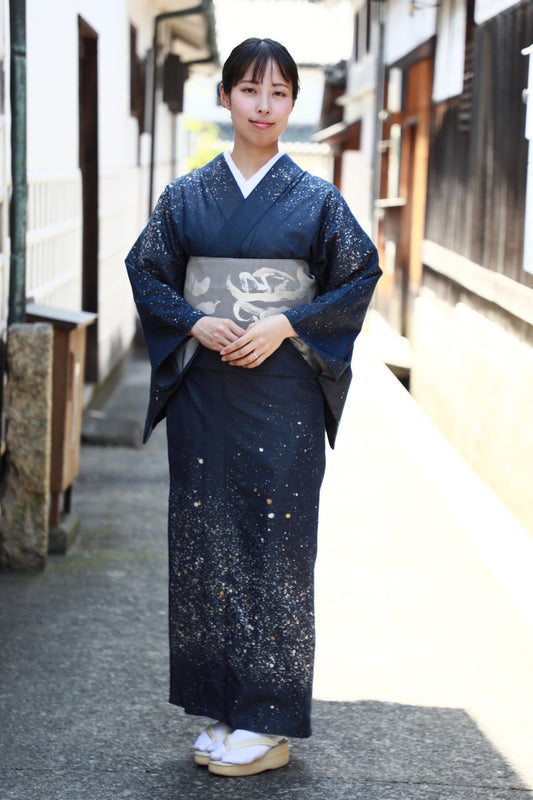
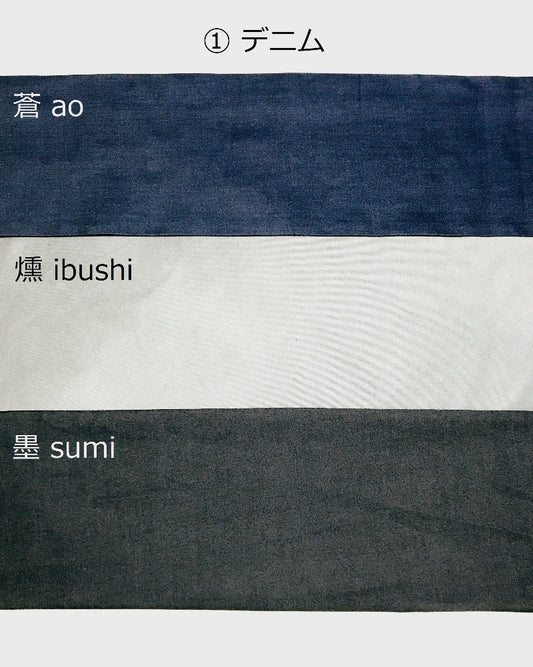
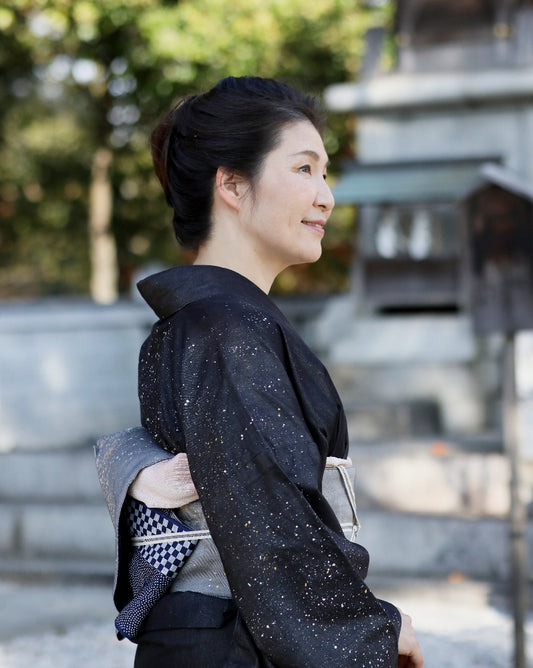
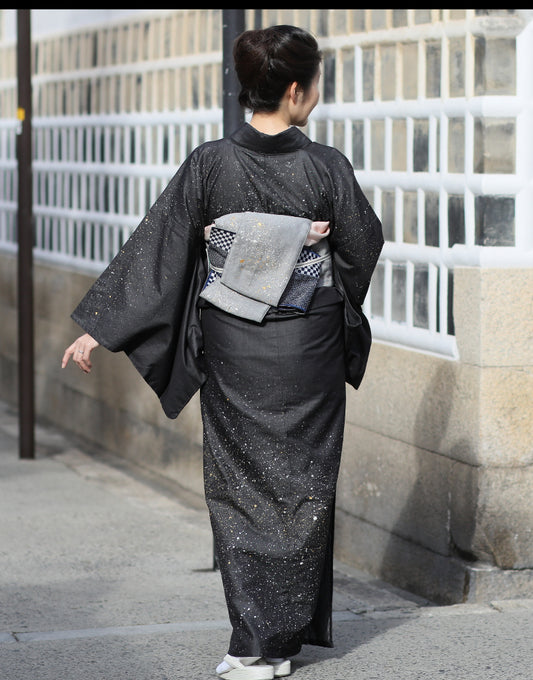
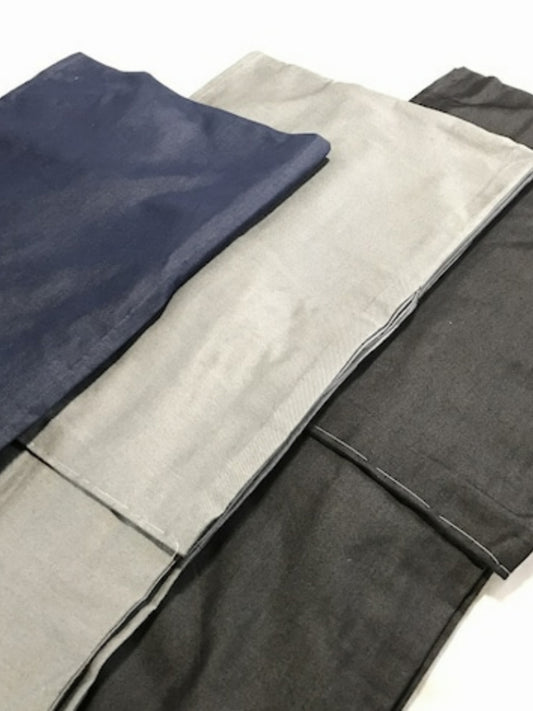
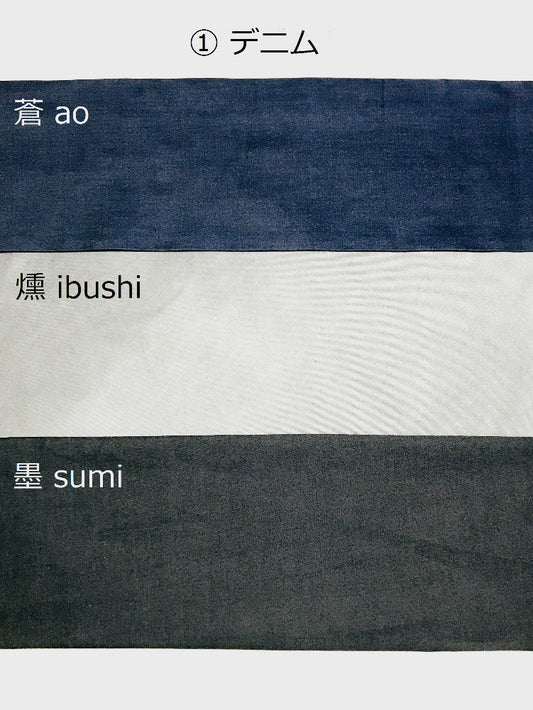
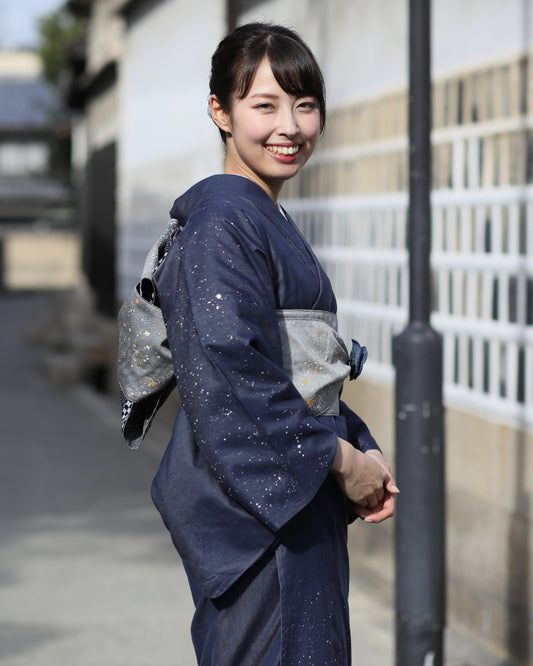
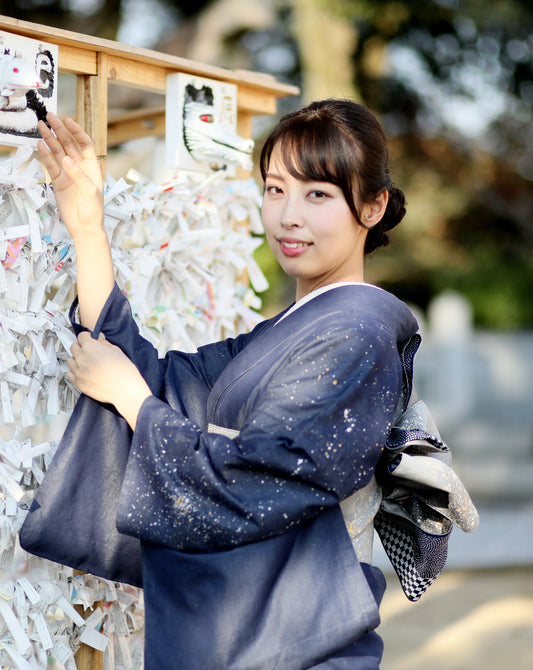
If you're ready to take another step toward becoming an advanced kimono wearer, consider bringing "the materials of tomorrow" into your wardrobe.
Plenty of kimono and obi are still made with traditional materials and techniques that honor the past — but ongoing technical innovation is also giving rise to entirely new kinds of kimono and obi.
Learning to weave those new materials in skillfully is itself part of the path toward becoming an advanced wearer.
We hope this helps you on your way to true kimono mastery.

Please use this as a reference to become a wonderful advanced kimono wearer.