Cotton Kimono
Cotton, alongside silk and hemp, is one of the classic natural fibers used in kimono, long favored for everyday wear, yukata (a casual summer kimono), and cotton kimono in general.
Compared to silk, it's easier to handle and highly breathable and moisture-absorbent, making it well suited to summer wear and everyday use.
That said, cotton wrinkles easily and comes with its own risks of fading and shrinking, so knowing the right way to care for it matters.

This article covers four areas: care after wearing, washing, drying and ironing, and storage.
Care After Wearing
Cotton absorbs sweat readily, so skipping care after wearing can lead to yellowing from sweat stains or even mold.
Once you take off the kimono, start with the following steps.
Let it air out
Like silk, cotton holds onto moisture easily.
Hang the kimono on a hanger right after wearing and let it air out somewhere shaded and well-ventilated for about one to two hours.
Avoid direct sunlight, which can cause fading.
Check for Sweat and Stains
Yukata and cotton kimono worn in summer, in particular, often carry sweat around the collar and back.
Because cotton doesn't show sweat as visibly, it's easy to overlook — and leaving it unchecked can lead to odor or mold.
Make it a habit to check after every wear whether the piece needs washing.
How to Wash It
Unlike silk, many cotton kimono can be washed at home, which is a real advantage.
That said, depending on the weave and dye method, some pieces may not be machine-washable, so always follow the guidance given at purchase or by the person who tailored it.
Hand-washing is the safest option
Hand-washing is the most reliable method.
Fill a large basin or sink with water, dissolve in a neutral detergent, and gently press-wash the fabric.
Avoid rubbing or wringing, which can damage the fabric — press-washing and gentle swishing are the way to go.
If you use a washing machine
More cotton kimono today are machine-washable.
If you do use a machine, always place the kimono in a mesh laundry bag, and select a gentle or "delicate" cycle.
It's best to wash it on its own rather than with other laundry — especially while the color is still new, to avoid color transfer.
Avoid Hot Water
Cotton is sensitive to high heat, which can cause shrinking.
Always wash in cold water or lukewarm water no warmer than about 30°C (86°F).
Bleach and fabric softener
Bleach isn't suitable for colored or patterned fabric and can damage it.
Fabric softener can also alter the texture of the fibers, so it's best to avoid using either whenever possible.
Dry in the shade, reshaping as you go
After washing, gently squeeze out excess water, then hang the kimono on a kimono-specific hanger and reshape it as it dries.
Direct sunlight causes fading, so drying in a shaded, well-ventilated spot is the standard approach.
Shape and Air Dry in Shade
After washing, gently wring out excess water, hang it on a kimono hanger, and reshape it before drying.
Direct sunlight causes fading, so the basic rule is to dry it in a well-ventilated, shaded area.
Iron while still slightly damp
Because wrinkles tend to set once cotton fully dries, ironing while the fabric is still slightly damp gives the best finish.
Use a pressing cloth and iron in one direction at a medium temperature (around 150°C / 300°F) to smooth the fabric without damaging it.
Pay attention to the seams and fold lines as you iron — this also makes it easier to dress in afterward.
Dry it completely
After ironing, always hang the kimono back up to let it dry completely.
Leftover moisture can lead to mold or odor, so this step matters.
Storage
Cotton kimono are sturdier than silk, but they're still vulnerable to humidity and insect damage, so the storage environment still deserves attention.
Wrap it in tatōshi paper
Like silk kimono, cotton kimono should be wrapped in tatōshi paper for storage.
The breathable washi paper helps guard against humidity, though it will discolor after a few years, so it's worth replacing periodically.
Where to store it
A kiri (paulownia wood) chest is the best option.
If you don't have one, store the kimono in a closet or oshiire (a Japanese-style storage closet) along with a dehumidifying agent.
Plastic storage cases tend to trap humidity, so make sure there's some way for air to circulate.
Airing Out (Mushi-boshi)
Cotton isn't especially prone to insect damage, but the risk of mold is still there.
Airing the kimono out in the shade for about half a day, once or twice a year on a dry, sunny day, helps clear out moisture and keep it clean.
Everyday Precautions
A few small daily habits go a long way toward making your kimono last:
・While eating and drinking: drape a napkin over your lap to prevent spills.
・Managing sweat: wear an underlayer like a hada-juban (a base layer worn under the kimono) or a sweat-absorbing inner garment with yukata and similar pieces, to keep sweat from soaking directly into the fabric.
・On rainy days: wear a rain coat, and if the kimono does get wet, wipe off the moisture and air it out in the shade right away.
・Accessories: washing or replacing the obi and han-eri (the collar worn under the kimono collar) regularly reduces the wear on the kimono itself.
The Appeal of Cotton Kimono and Why Care Matters
The ease of caring for cotton kimono at home is what makes them so easy to work into everyday life.
A bit of wrinkling or fading can even be enjoyed as character — something silk simply doesn't offer in quite the same way.
At the same time, washing and storing it properly lets you enjoy it beautifully for even longer.
Kimono has a reputation for being difficult to care for, but cotton pieces are approachable even for beginners, making them an easy choice for everyday wear.
The time spent caring for it becomes part of what makes kimono a natural part of daily life — enriching a more traditional Japanese way of living.
In Summary
Cotton kimono are sturdier and easier to wash than silk, but come with their own particular weaknesses — wrinkling, shrinking, and fading.
Always air it out and check for sweat or stains after wearing.
Hand-washing is the default; if using a machine, always use a mesh bag and a gentle cycle.
Dry in the shade and iron while slightly damp for the best finish.
Use tatōshi paper and a kiri chest, with humidity control in mind.
Keeping these points in mind means a cotton kimono can be worn and loved for decades as reliable everyday wear.
That ease of care is really the biggest appeal of cotton kimono.
One More Thing
Cotton kimono are easy to handle and have a wonderfully rustic charm.
But that same rustic quality can sometimes keep them from ranking among the more stylish, dressed-up options for going out.
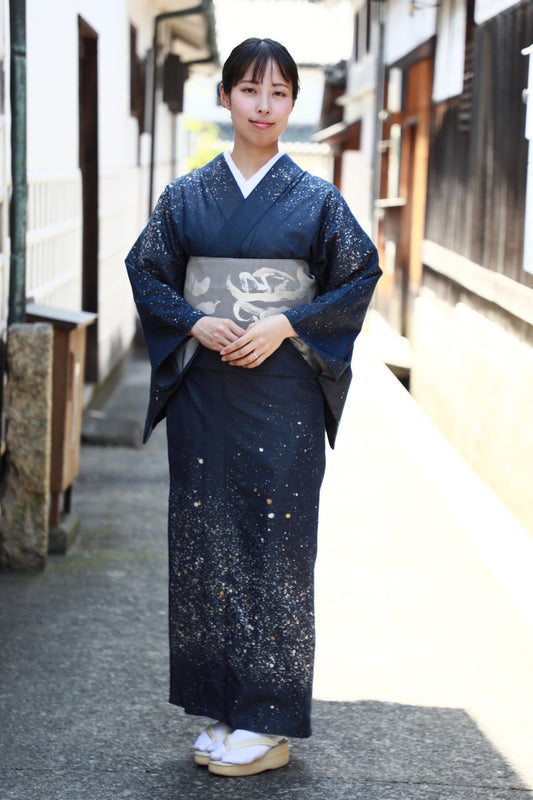
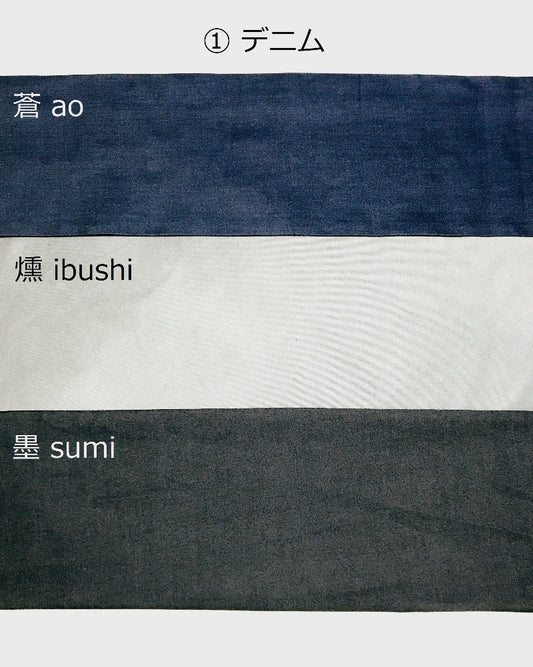
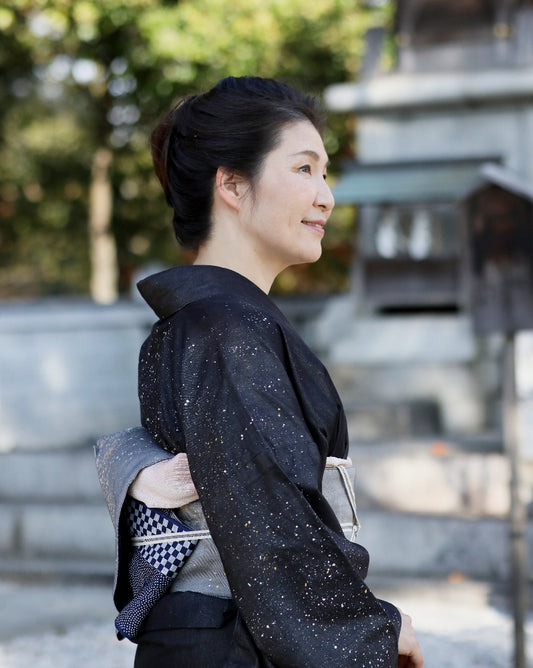
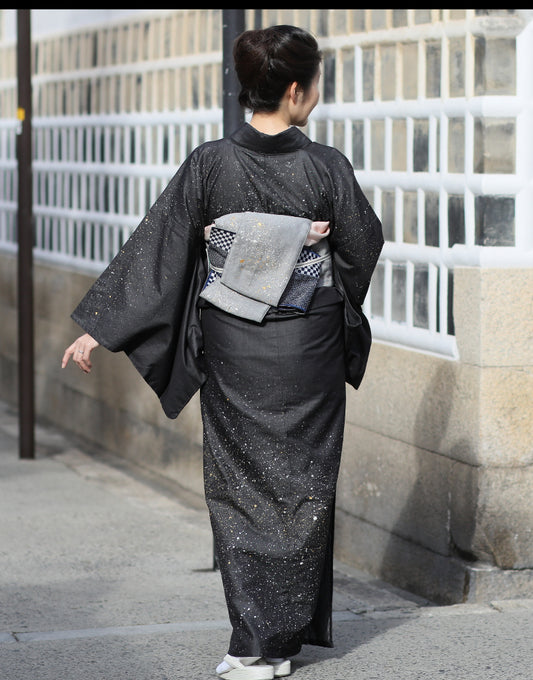
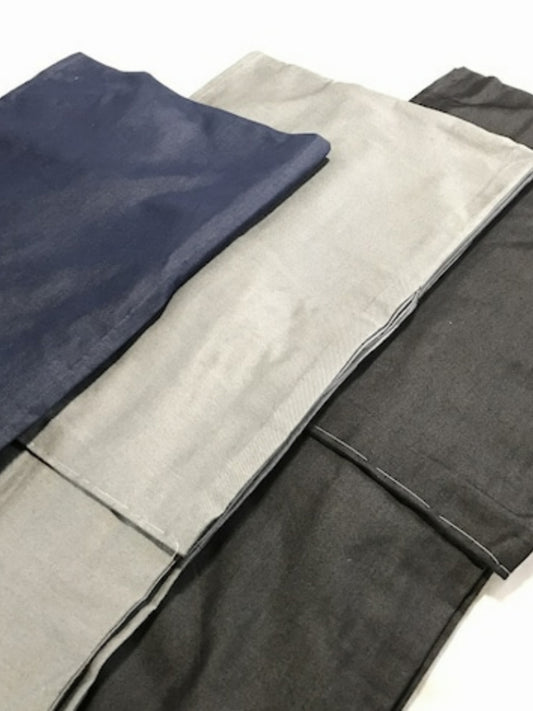
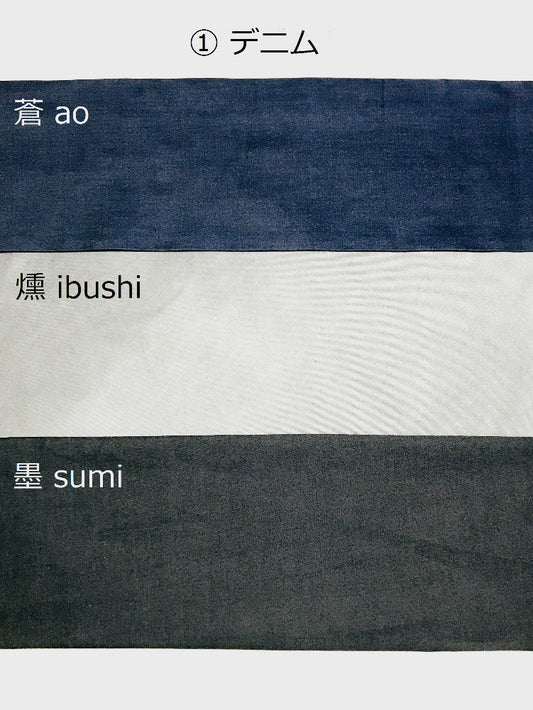
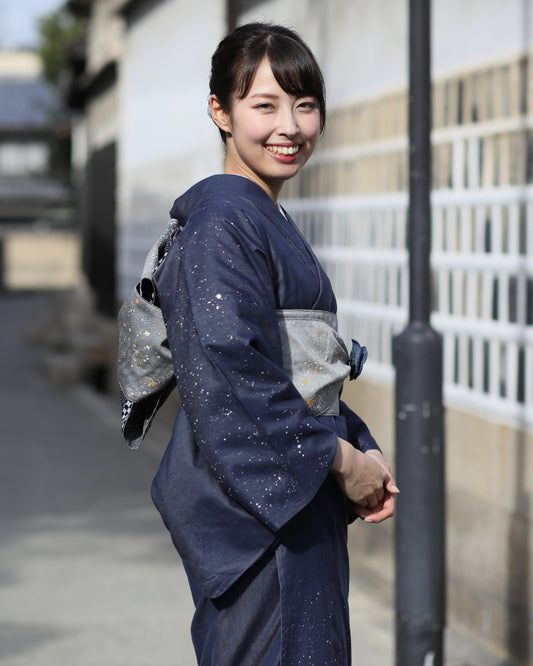
Here, we'd like to introduce a kimono that keeps all the ease of cotton care while offering a more elevated look: the cotton and silk twill kimono.

The warp threads are cotton and the weft threads are silk, but care is nearly identical to a regular cotton kimono.
Note: strong friction — such as from a high-speed spin cycle — can create unevenness on the fabric's surface and dull its sheen, so we recommend hand-washing and a brief spin only.
We hope this helps make your kimono life easy, comfortable, and enjoyable.