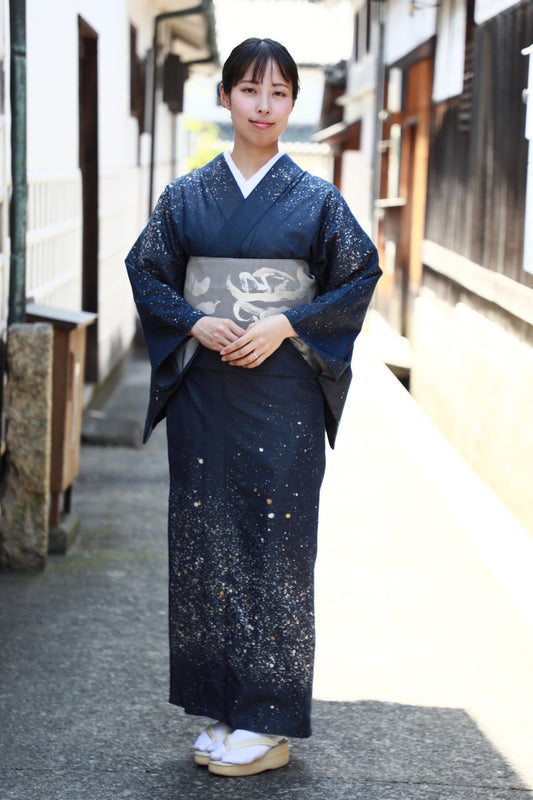
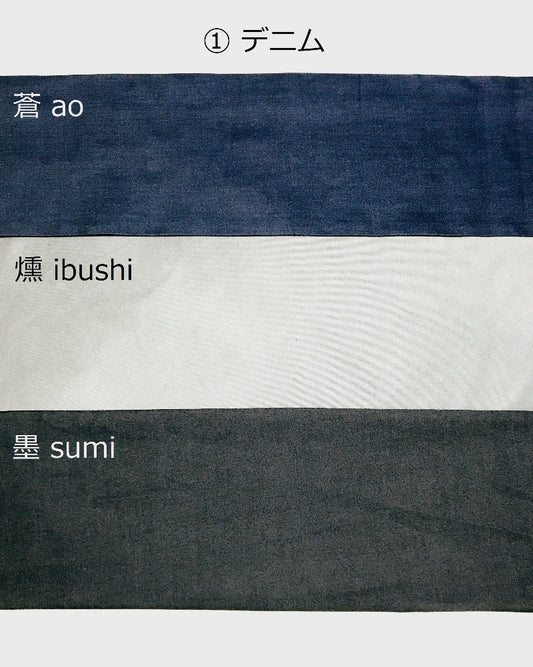
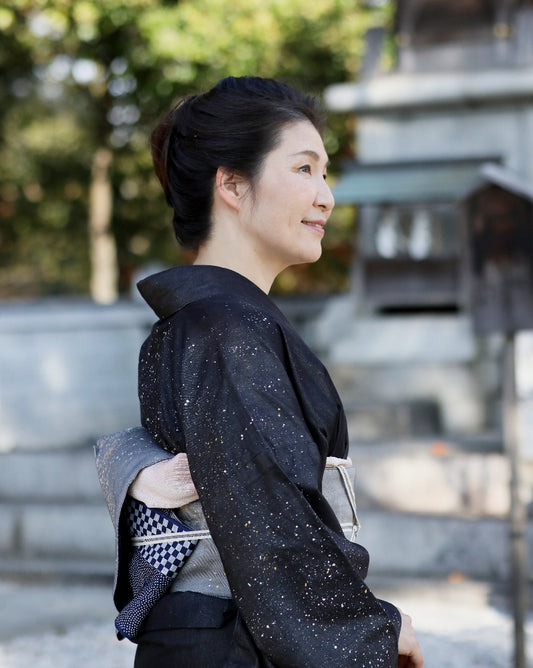
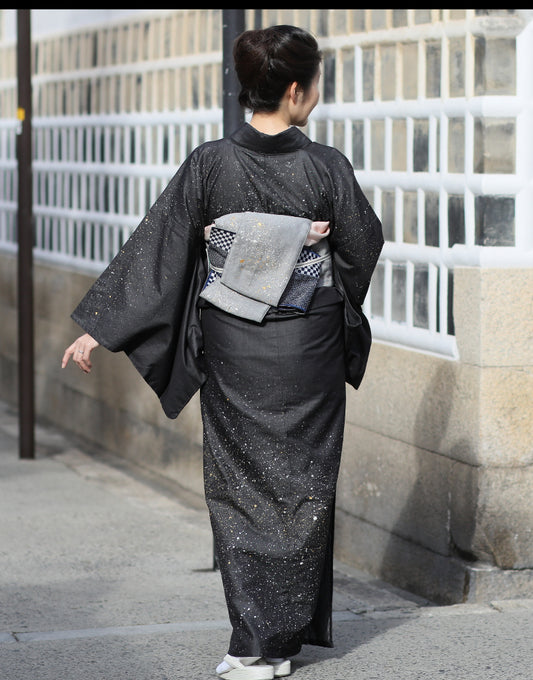
Linen Kimono
Linen (asa) has been an essential part of Japanese life since ancient times, especially for summer kimono and yukata (a casual summer kimono).
It's known for its crisp, cool hand-feel and excellent breathability and moisture absorption, making it arguably the most comfortable fabric for the height of summer.
Compared to silk or wool, it's also sturdier and holds up well to sweat and water.
That said, linen comes with its own quirks — a tendency to wrinkle, a risk of yellowing, and moisture-related issues during storage — all worth keeping in mind.
Here, we'll cover care after wearing, washing, drying and ironing, storage, and everyday precautions for keeping a linen kimono in great shape for years to come.
Let it air out
Hang it on a kimono-specific hanger right after taking it off, and air it out somewhere shaded and well-ventilated for two to three hours.
Linen absorbs moisture readily but also dries quickly, so this small step goes a long way toward preventing odor and dampness the next day.
Check for Sweat Stains and Dirt
The collar, underarms, and back are especially prone to holding onto sweat.
If you notice a faint white residue, that's salt rising to the surface — don't leave it as is; consider washing the whole piece or spot-cleaning that area.
If you can't wash it right away, place a towel against the inside of the fabric and lightly mist it with water — this transfers the sweat and salt onto the towel and helps keep the kimono clean in the meantime.
Smooth Out Wrinkles
Linen wrinkles easily.
Hanging it up after wearing helps larger wrinkles relax somewhat on their own.
For more stubborn wrinkles, a light mist of water can help.
How to Wash It
Linen holds up to water better than silk or wool, and it's generally washable at home.
For everyday linen kimono or yukata-style pieces, regular washing helps keep them clean.
Hand-washing is the default
Fill a basin with water, dissolve in a neutral detergent, and press-wash the fabric gently.
Avoid rubbing or kneading, which can damage the fibers.
Higher-end pieces — like jōfu (a fine, high-quality hemp weave, such as Echigo-jōfu or Miyako-jōfu) — are best left to a specialist.
When Using a Washing Machine
Some modern linen kimono are machine-washable.
Place it in a mesh bag and select a "hand-wash" or "delicate/dry" cycle, washing it alone to prevent color transfer.
Water temperature should ideally stay below about 30°C (86°F).
Using bleach
Oxygen-based bleach can sometimes be used on plain white linen, but it's not recommended for colored or patterned pieces, since it can cause discoloration.
Drying and Ironing
How you dry and finish a hemp kimono after washing determines how beautiful it looks.
Skip the spin cycle — instead, press out excess water using a towel, then hang it to dry so it holds its shape.
Dry in the shade
Reshape the kimono and hang it on a kimono-specific hanger.
Always dry it in the shade — direct sunlight causes fading and yellowing.
Ironing
Because wrinkles set into linen once it dries, it's best to iron it while there's still a little dampness left in the fabric.
Use a high temperature (around 180°C / 355°F), a pressing cloth, and glide the iron in one direction.
Using the steam function alongside this helps the fibers settle nicely and brings out a natural sheen.
Complete Drying
Don't fold the kimono away right after ironing — hang it back up until it's fully dry.
Leftover moisture can cause mold or odor.
Storage
Since linen kimono are worn only in summer, they often sit in the chest for long stretches of the year, which makes proper storage especially important.
Wrap it in tatōshi paper
Once it's thoroughly washed and dried, wrap it in tatōshi paper for storage.
If any sweat is left behind before storing, it's very likely to cause yellowing or staining by the time you take it out the following year — so this step matters.
Where to store it
A kiri (paulownia wood) chest is ideal, though an oshiire (a Japanese-style storage closet) or regular closet works too.
Use a dehumidifying agent alongside it to keep moisture at bay.
Airing Out
As a summer-only fabric, the standard approach is to fully wash a linen kimono before putting it away for the season.
On top of that, airing it out about once a year is a good extra safeguard — hang it in the shade for about half a day on a dry, sunny day to let air pass through it.
Everyday Precautions
A few habits while wearing your kimono help it last even longer:
・Wear a sweat-absorbing inner layer: this keeps sweat from soaking directly into the fabric.
・While eating: stains show easily, so keep a lap blanket or napkin handy.
・On rainy days: linen dries quickly even when wet, but watch out for mud splashes and water stains — a rain coat helps put your mind at ease.
・At the end of the season: never put it away as-is — always wash it first before storing.
The Appeal of Linen Kimono and Why Care Matters
Linen is an essential fabric for summer dress, and its cool, refreshing quality is something no other fiber quite matches.
It's also sturdy and long-lasting — with the right care, a linen kimono can be worn for decades.
Left untreated, though, it's prone to yellowing and mold, which is why "wash before you store it" is really the single most important rule.
Because linen kimono can be washed at home, keeping up with regular care makes it easy to enjoy a summer kimono lifestyle without much stress.
In Summary
Linen kimono are a wonderfully refreshing choice for summer, but they do have a few particular weaknesses:
・Always air it out and check for sweat and stains after wearing.
・Hand-washing is the default, with excess water pressed out using a towel rather than a spin cycle.
・Dry in the shade and iron while slightly damp to smooth out wrinkles.
・Always wash before storing, and use tatōshi paper along with a dehumidifying agent.
Keeping these points in mind is enough to preserve that cool, crisp quality and enjoy a linen kimono for years to come.
Make proper care a habit, and let it become a piece that enriches your summer life.