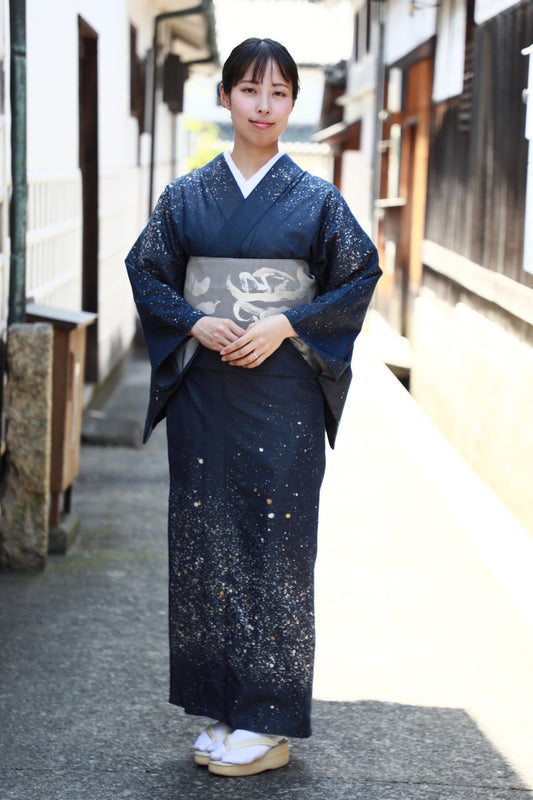
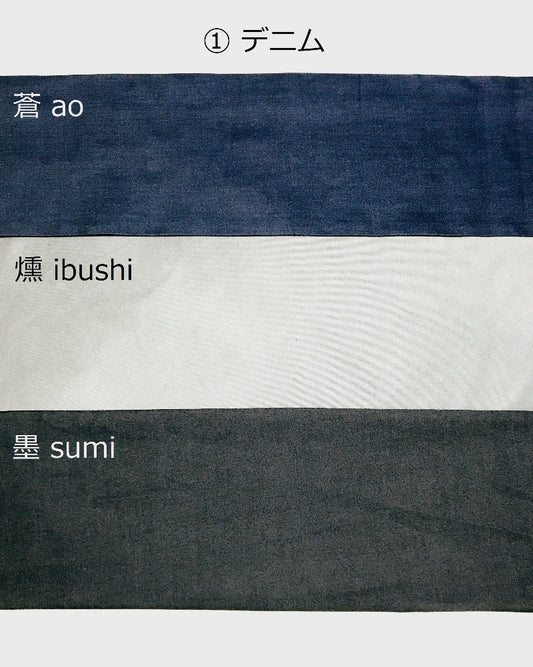
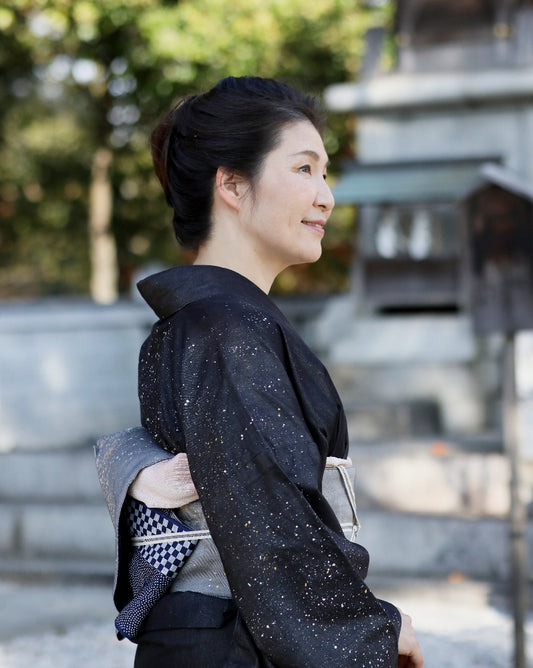
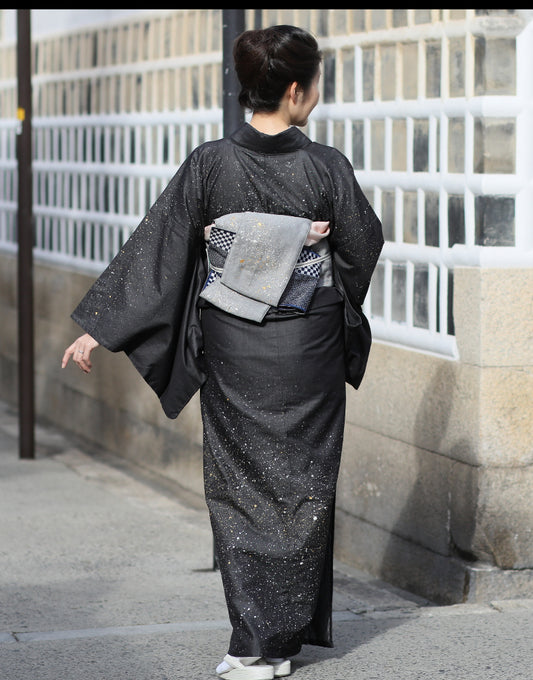
Cotton and Silk Twill Kimono
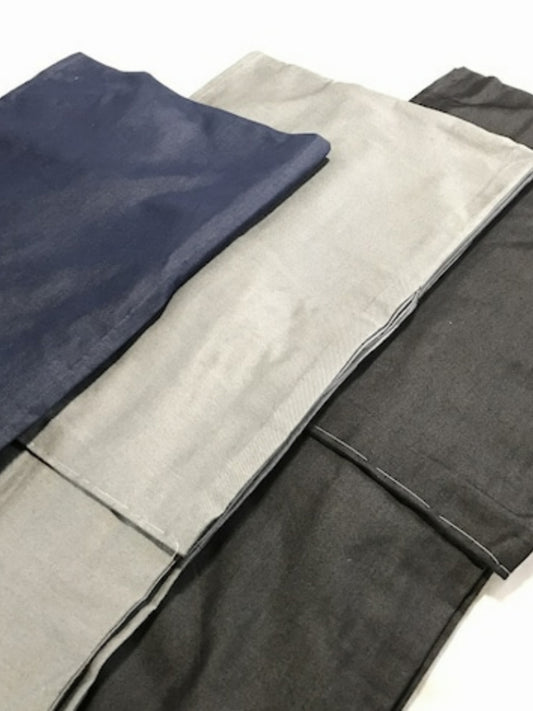
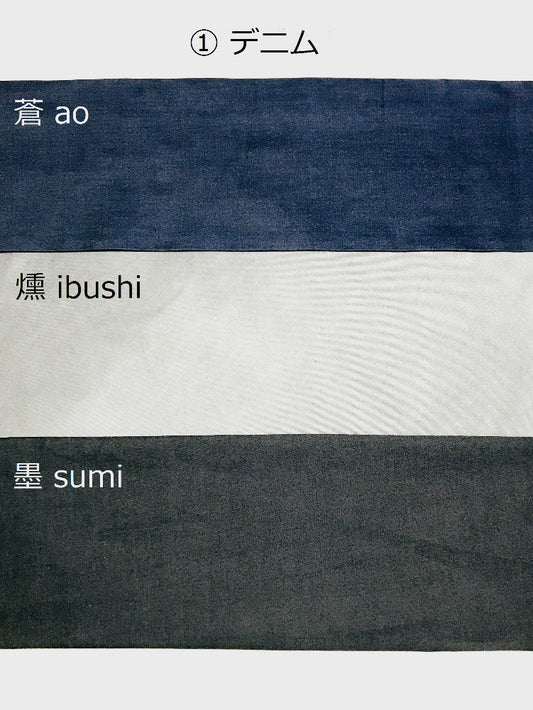
Cotton and Silk Twill is a hybrid fabric that blends silk with cotton.
It's typically woven at a ratio of around 65% cotton to 35% silk, combining silk's refined sheen with the sturdiness and casual character of cotton denim.
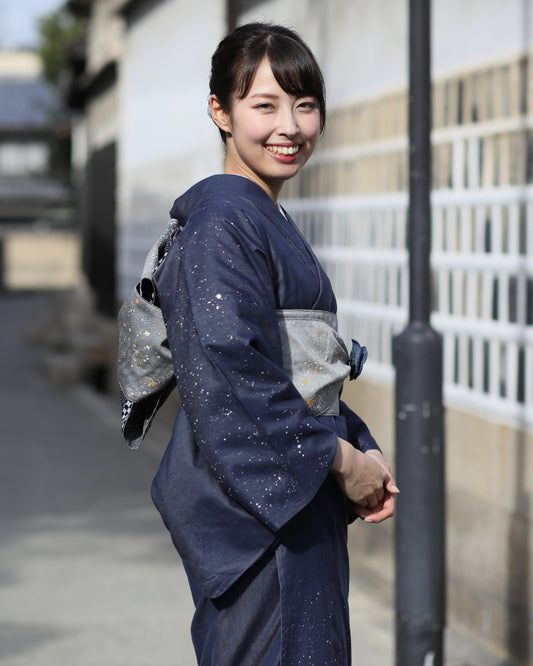
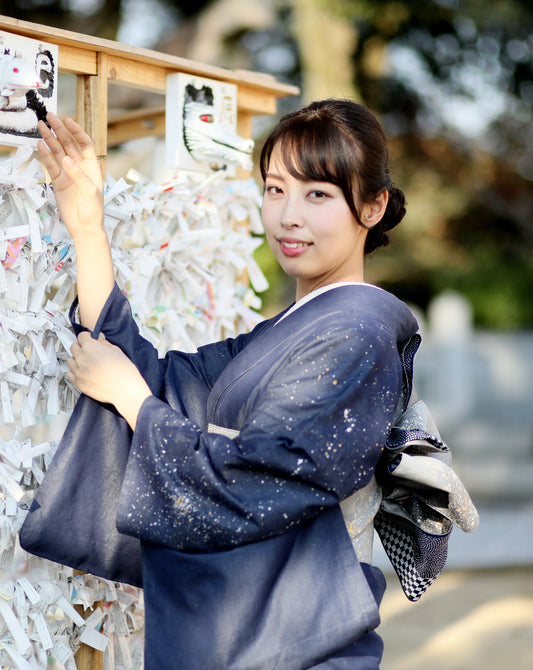
A kimono tailored from this fabric carries the easygoing feel of a denim kimono, while its appearance gains a subtle luster and softness — striking a delicate balance that's neither too formal nor too casual.
It's drawing attention as a kind of bridge between Western and Japanese dress.
The standout feature of Cotton and Silk Twill, despite containing silk, is its water resistance — giving real peace of mind for kimono outings on days with sudden rain or uncertain weather.
Here, we'll use a kimono tailored from a carefully selected Cotton and Silk Twill fabric woven in Okayama as a representative example, covering care after wearing, washing, ironing, storage, and everyday precautions in that order.
Note: our Cotton and Silk Twill fabric is produced by Shōwa Co., Ltd. in Kojima, Kurashiki City, Okayama Prefecture.
Care after wearing
Cotton and Silk Twill is mainly cotton, but because it also contains silk, it's somewhat more delicate when it comes to sweat, humidity, and especially friction.
Air it out
Always hang it on a kimono-specific hanger after wearing, and let it air out in the shade for about half a day to clear away any moisture.
Brush off dust
Because it's mostly cotton, it tends to attract dust, and the silk content makes it prone to static as well.
A soft brush — the kind used for kimono or cashmere — works well for lightly brushing it clean.
Odor care
If food odors have transferred, hang it in a well-ventilated area to allow the odors to dissipate naturally.
Avoid using deodorizing sprays as they may damage the fibers.
How To Wash It
It can be hand-washed at home, but keep the following points in mind:
Fold the kimono flat and place it in a mesh laundry bag.
Rolling the bag up and lightly securing it with string at a few points keeps the kimono from shifting inside and losing its shape.
Use cold water or lukewarm water no warmer than about 30°C (86°F).
Add a small amount of neutral detergent.
If using a washing machine, select a gentle cycle or a "delicates" setting.
Keep the spin cycle short — under 20 seconds — to help prevent wrinkling. (A wrinkle is essentially a small crease on the surface of the fabric, and it can dull the fabric's sheen.)
Dry cleaning is also an option
The care above is enough for everyday maintenance, but if there's a long stretch before you'll wear it again, or if you'd like to keep it looking its best for longer, it's worth leaving it to a trusted cleaner experienced with Japanese garments.
Treating Stains
For a localized stain, apply a diluted neutral detergent solution and gently work it in with light kneading or dabbing.
Avoid scrubbing hard — the rule is to lift the dirt away, not force it out.
Once the stain is gone, rinse the detergent out thoroughly under running water.
Press the area between two towels to remove as much water as possible.
Dry it in the shade, somewhere well-ventilated.
How to Iron It
A medium temperature — around 140–160°C (285–320°F) — is right for Cotton and Silk Twill.
It's best to use a pressing cloth and iron from the reverse side of the fabric.
For stubborn wrinkles, lightly misting the area with water first makes them easier to smooth out.
Avoid high heat, which can dull the fabric's sheen, and avoid pressing hard along the seams, which can cause shine or alter the texture.
Storage
Denim fabric is sturdy, but since this piece contains silk, it's worth storing it somewhere with as little humidity as possible and no risk of insect damage.
Wrapping it in tatōshi paper protects it from dust and light. A kiri (paulownia wood) chest is ideal for storage, though a closet or storage case works fine too — just use a dehumidifying agent alongside it to keep humidity in check.
Preventing set-in fold lines
Because it contains cotton, the fabric has a bit more stiffness than a 100%-silk kimono, and folds can become permanently set if it's left folded for a long stretch of time.
Taking it out each season, hanging it up, and letting it get some air helps prevent this.
Everyday Precautions
Areas that see a lot of friction — around the obi and at the cuffs — can develop fuzzing or fading more easily.
Reducing friction where you can, such as using a protective cloth under the obi, helps.
Our Cotton and Silk Twill kimono is reactive-dyed, giving it a color-fastness rating of 4–5 — a notably high rating.
Because of this, color fading or color transfer is rare under normal use.
That said, avoid leaving it wet for extended periods or rubbing it with strong force.
Seasonal notes
It can technically be worn year-round, but its slight thickness makes it less suited to the height of summer.
It's best enjoyed across the other three seasons — spring, autumn, and winter.
Level of formality
Because it combines the casual character of denim with the elegance of silk, it's especially well suited to occasions that call for a bit of polish without being fully formal — a theater outing or a walk around town, for example. We hope you'll enjoy playful, creative coordination that fits naturally into a modern lifestyle.
In Summary
Cotton and Silk Twill is a hybrid fabric born from the marriage of sturdy cotton and delicate silk, and caring for it means keeping both of those qualities in mind:
Air it out after wearing to clear away dust and moisture thoroughly.
It's machine-washable at home — use a mesh bag, a gentle cycle, neutral detergent, and a spin cycle of about 20 seconds.
Dry cleaning is also an option.
Dry it in the shade, and iron at a medium temperature with a pressing cloth.
Storage is best with tatōshi paper, and — as with any kimono — keep humidity and insects in mind.
Take it out and refresh it each season.
With just a little attention to these points, you can enjoy the refined feel of a Cotton and Silk Twill kimono for years to come.