"Ichimatsu Monyou"
- Two Colors of Squares, Arranged in Neat, Alternating Rows -
"There isn't a single day I don't wear ichimatsu," says kyōgen actor Shigeyama Ippei — a self-described, unabashed devotee of the ichimatsu pattern.
He said as much on NHK BS's Bi no Tsubo ("The Essence of Beauty"), broadcast on July 23, 2021. (Note: the broadcast date may have varied by region.)
His passion for the pattern goes back more than 20 years — he wears ichimatsu-patterned socks and underwear every single day, and reportedly owns over 200 ichimatsu-themed items.
The history of the ichimatsu pattern runs deep. It appears on pottery from the Jōmon period and on haniwa clay figures from the Kofun period.
It's said that people in ancient times, sensing a connection between themselves and the universe and the natural world, expressed that boundless sense of expansiveness through a grid-like design.
The pattern's now-familiar name only took hold in the Edo period, and it comes from a kabuki actor: Sanogawa Ichimatsu.

The alternating two-color checkered pattern he wore on stage eventually came to be known, after his name, as ichimatsu monyou.
Before that, the pattern was generally known as ishidatami ("stone pavement") pattern.

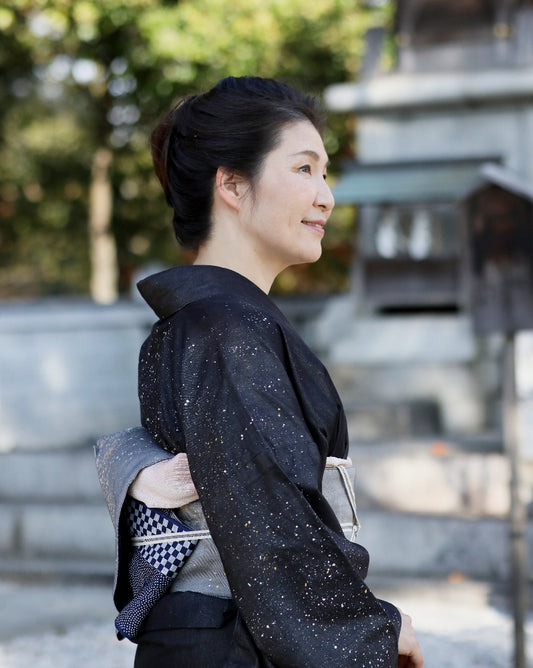
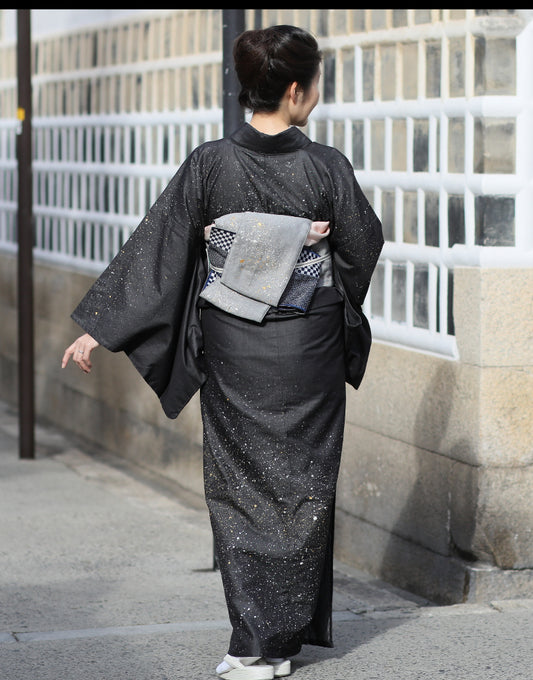
We use the ichimatsu pattern in our obi for both men and women, as well as in various accessories — woven directly into the Tatamiberi itself.

— woven directly into the Tatamiberi itself.
As it happens, the beloved business card holder Shigeyama Ippei showed on television appeared to be made from Tatamiberi as well.
Outside Japan, incidentally, this pattern is simply known as "check" or "checkerboard."
Though it's often thought of as a distinctly Japanese design, ichimatsu is, in truth, a pattern loved all over the world.
Doesn't it make the pattern feel a little more fascinating, thinking of it as something that connects us to the rest of the world?