Same Monyou (Shark-Skin Pattern) / Same Komon
"Same" refers to the shark that lives in the sea.
This pattern takes its name from its resemblance to shark skin.
You may not often come across real shark skin in daily life, but one place you might have seen it is on the grating surface of a traditional wasabi grater, which is sometimes covered in real sharkskin (samekawa).
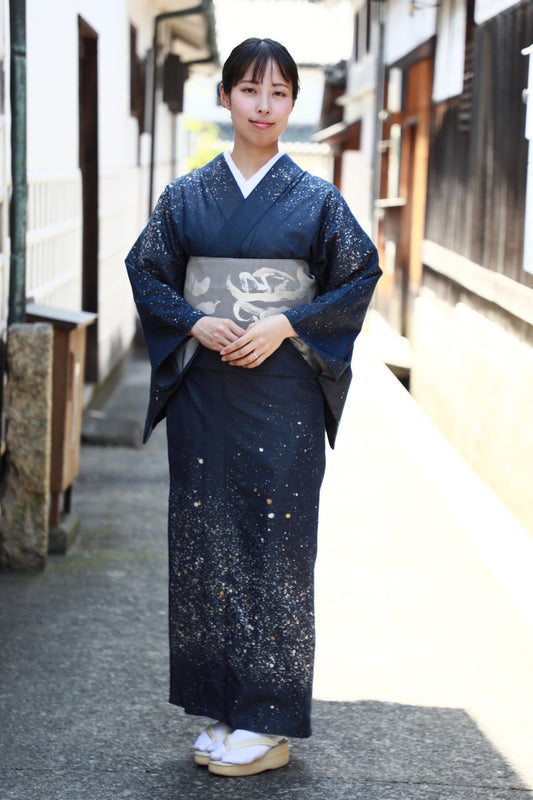
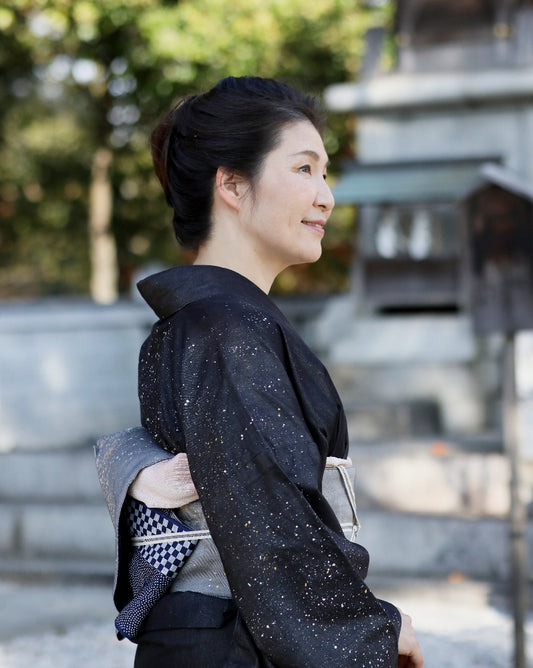
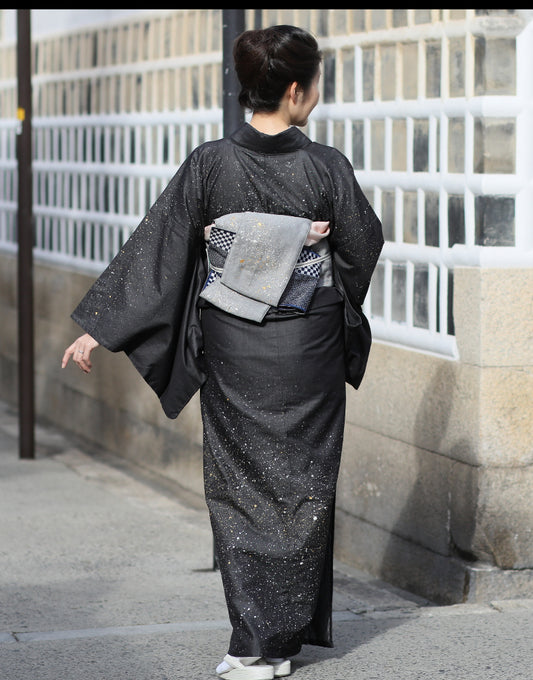
As a monyou, same consists of small dots arranged in overlapping arcs, creating a dense, textured pattern.
During the Edo period, this was one of the monyou used on the kamishimo — the formal attire worn by samurai.

In Edo, where the samurai class lived, each domain (han) had its own officially designated monyou, worn on the kamishimo as a kind of emblem.
Same monyou was the designated pattern of the Kishū Tokugawa family, one of the branches of the ruling Tokugawa clan.
Tough shark skin was likened to armor, and the monyou came to carry meanings of protection against evil and misfortune.
Because the dots are so small and fine, the monyou can look almost like a plain solid color from a distance.
And the finer the pattern, the more advanced the craftsmanship required to weave it, which is part of why it's traditionally considered a high-ranking monyou.
In Kojima, Kurashiki City, Okayama Prefecture, same monyou is woven directly into Tatamiberi.

It's a monyou used widely — not just on kimono and obi, but on all kinds of accessories and everyday items.

Knowing the meaning behind a monyou like this can add a small sense of reassurance, or even make you sit up a little straighter, aware of its quiet dignity.
Perhaps that's one of the small pleasures monyou can bring to everyday life — a subtle shift in how you feel, just from knowing the story behind the pattern.