Sanadahimo is traditionally used for things like the cord on a sword's scabbard (sageo) and the cords securing the paulownia-wood boxes used for tea ceremony utensils.
Though it's called a "cord," it's actually a narrow, flat-woven textile — far less stretchy than a braided cord, and remarkably strong and durable.
One theory traces the name back to the Sengoku period, to Sanada Masayuki and his son Yukimura, who are said to have woven this cord while confined to Kudoyama after their defeat at the Battle of Sekigahara.
Traveling merchants sold it as "the strong cord made by the Sanada," and the name Sanadahimo stuck.
The cord eventually made its way to Kojima, where it spread nationwide after travelers making the popular "twin pilgrimage" to both Kotohira Shrine and Yuga Shrine bought it as a souvenir from shops along the pilgrimage road.

There's a specific reason Kojima came to weave Sanadahimo.
Kojima, in Kurashiki City, Okayama Prefecture, was originally an island surrounded by sea, which left its soil naturally high in salt content — poorly suited to rice farming, but ideal for cotton, which tolerates salt well.

That's why Kojima's Sanadahimo is still woven from premium 100% cotton today.
Nozaki Buzaemon — known as the "Salt Field King" and the founder of Naikai Salt Industries — actually started out in the cotton weaving business himself, manufacturing and selling Kokura tabi (traditional split-toe socks in the Kokura style).

He later succeeded in developing salt fields, and today his sprawling former residence, the Kyu Nozaki House, is designated an Important Cultural Property of Japan and stands as one of Kojima's major tourist attractions.

More recently, it also served as a filming location for the movie Don't Call It Mystery, starring Suda Masaki.

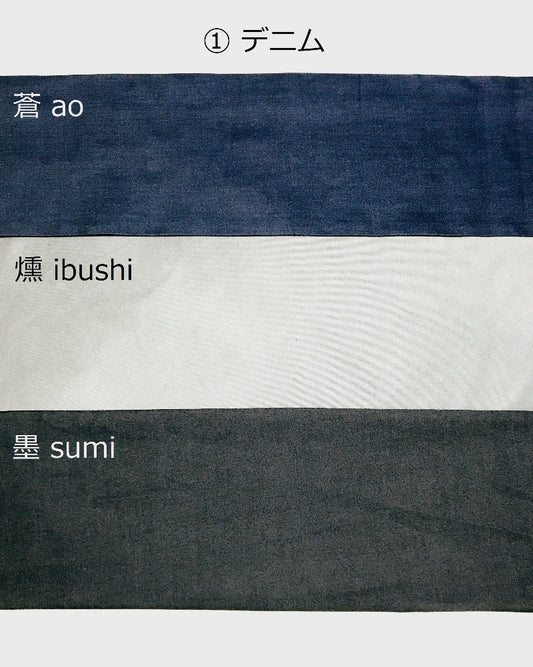
From there, Kojima's cotton weaving industry underwent remarkable growth over time — from Sanadahimo, its narrowest weave, all the way to wide-width fabrics like denim and canvas.
Sanadahimo, in many ways, marks the historical starting point of that entire development.
Because it's so narrow, it rarely becomes the centerpiece of a textile product on its own — but used as an accent, it makes a striking impression.

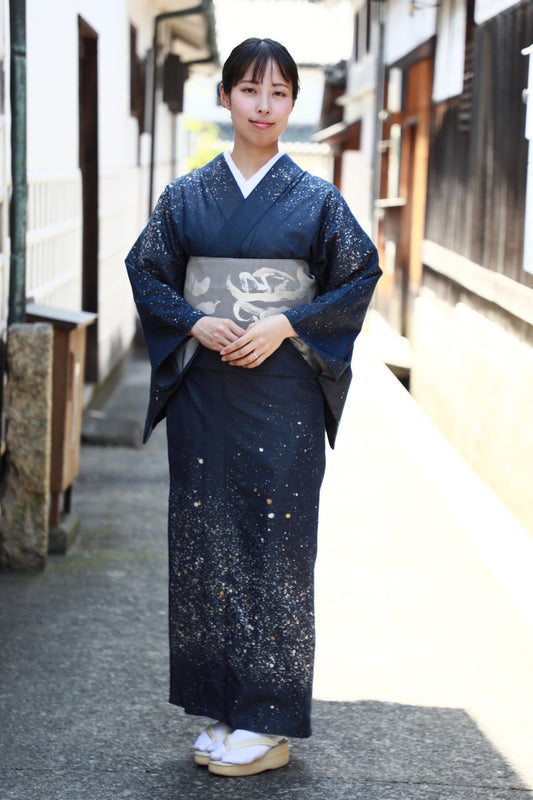
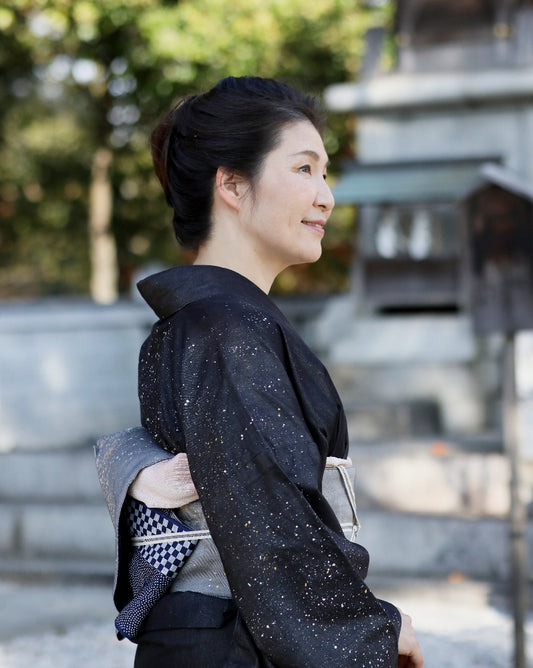
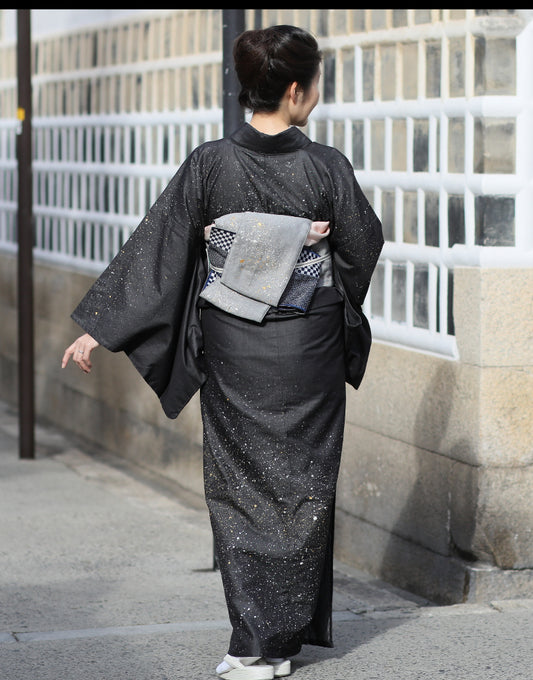
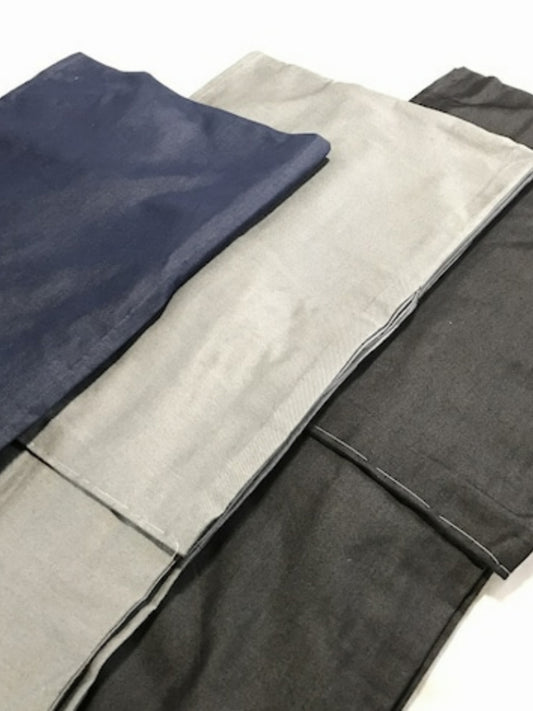
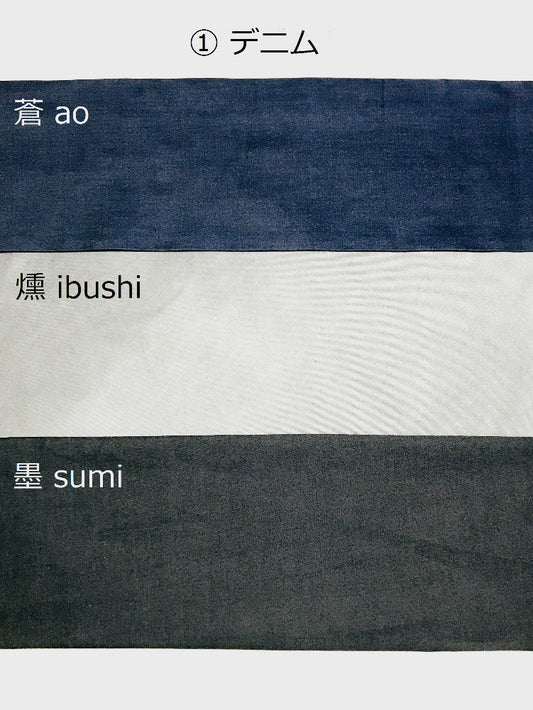
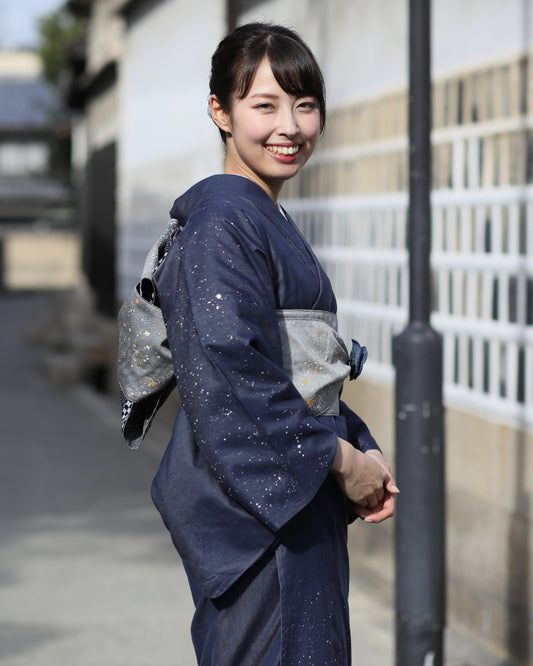
Kojima Obi is a reversible obi made from Tatamiberi on one side and denim on the other, using textiles entirely sourced from Kojima, Kurashiki City, Okayama Prefecture. Sanadahimo is used as a decorative accent on the denim side of the obi.
It's proven to be such a stylish touch that customers can now choose from four different Sanadahimo patterns to create an obi that's entirely their own.

When designing Kojima Obi, there was one thing we felt strongly about: we wanted to use Sanadahimo.
It carries the weight of a storied history, and the presence that comes with it.
Kojima Obi itself is a relatively new addition to Japanese dress, first created in 2017 — but every material used in it carries its own history.
Sanadahimo, in particular, is said to have a 400-year history, honored as a benefactor of Kojima's weaving industry through a memorial stone to Sanada Yukimura erected on Mount Yugasan.

We're able to use Sanadahimo today only because people in the past carefully protected and preserved it.
If we keep combining old and new with fresh ideas and continue creating good work, what we leave behind will reach future generations as something even better.

Kojima Obi, adorned with Sanadahimo, will bring vivid beauty to Japanese dress a hundred years from now — carrying its history forward toward its five-hundredth and six-hundredth anniversaries. This year marks that first step.