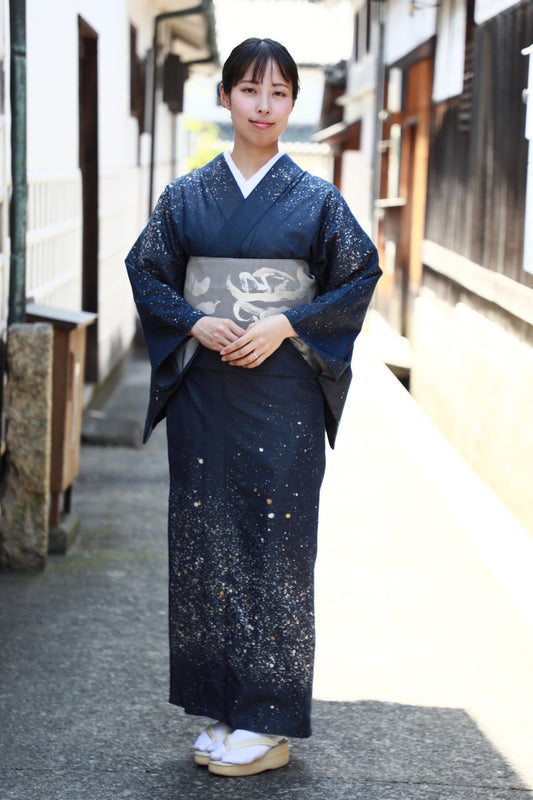
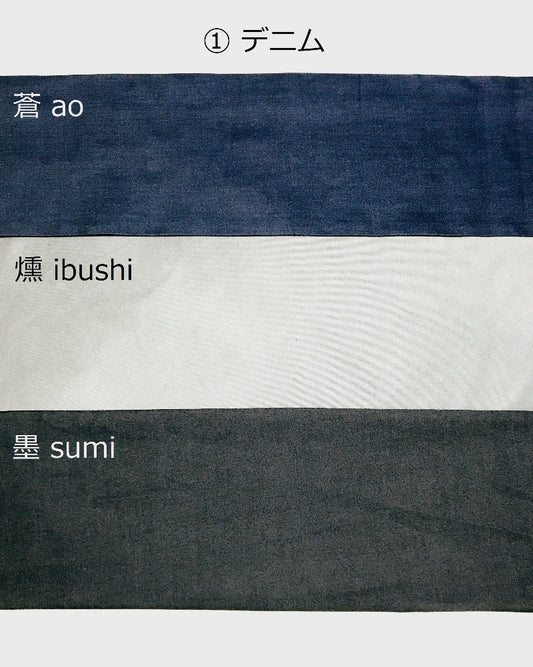
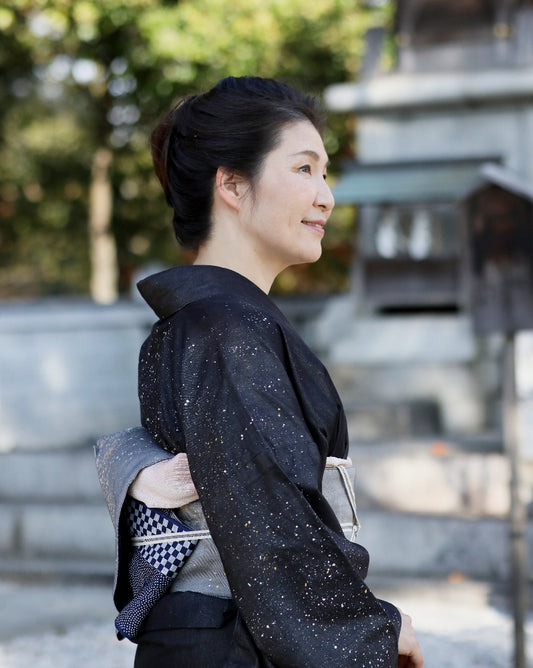
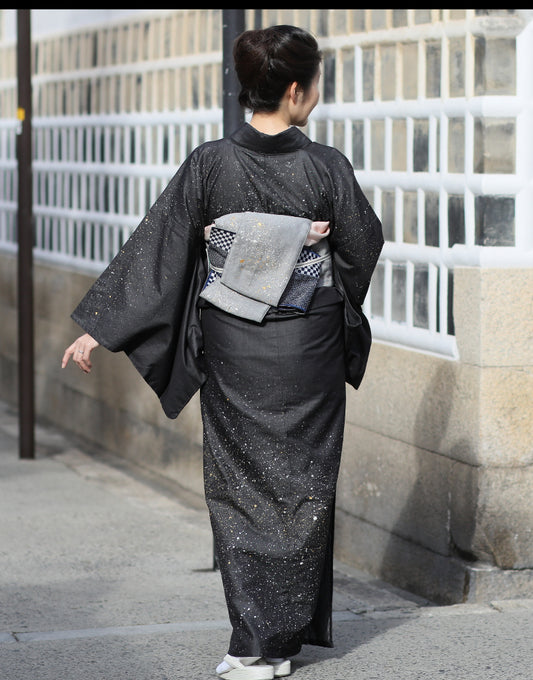
It's widely known that Kojima, in Kurashiki City, Okayama Prefecture, is the birthplace of Japanese-made jeans — and those jeans are made from denim.
Okayama denim carries a level of quality recognized around the world.
It's no exaggeration to say that Okayama's dyeing and weaving represent the pinnacle of Japanese craftsmanship.
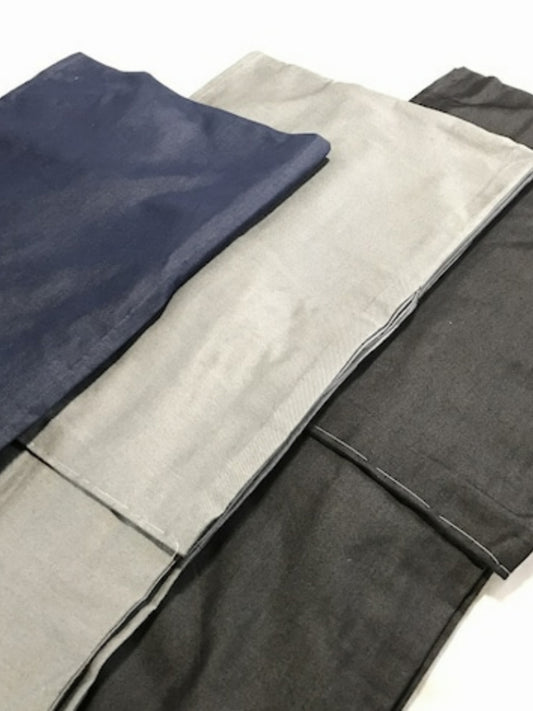
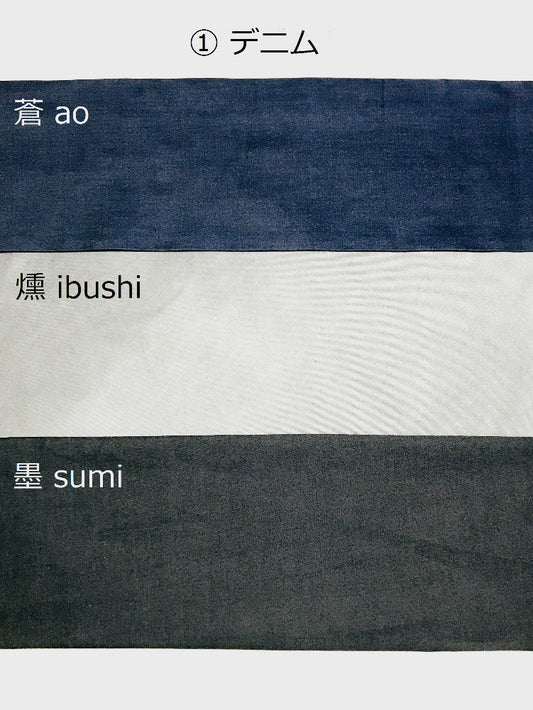
Cotton and Silk twill is what happens when that very best of techniques comes together in a single fabric.

The Cotton and Silk twill we work with is made by SHOWA Co., Ltd.
Founded in 1905, SHOWA (referred to here simply as SHOWA) is a weaving manufacturer in Kojima, Kurashiki, with a history spanning more than a century.
Fully integrated textile manufacturers — companies that handle the entire weaving process in-house — have become quite rare today, and SHOWA is known as the only company in Kojima that still maintains that kind of production capability.
SHOWA has built its history around a single, unwavering commitment: texture.

The fabric SHOWA weaves is widely praised as remarkably soft and pleasant to the touch — quality good enough to completely upend the old image of denim as mere workwear.
In 2009, SHOWA achieved something remarkable: a Handle Award at the first-ever Première Vision Awards — an event often described as the Paris Fashion Week of textiles — for a 100% wool denim fabric.
SHOWA is a company that keeps producing fabric that designers around the world want to get their hands on.
That same commitment is exactly what gave rise to Cotton and Silk twill.

Everyone knows that fabric is made of warp and weft threads — but have you ever thought about how much work goes into weaving together two threads with completely different properties?

It's likely far more difficult than you'd imagine.
The warp thread is a plant fiber — cotton.
The weft thread is an animal fiber — silk.
Their properties, durability, and dyeing all require completely different handling.
It's the kind of labor-intensive weaving that most manufacturers simply wouldn't attempt.

Back when men's denim dominated the market, SHOWA saw ahead of its time the need for women's and children's textiles, and began independently planning and manufacturing its own original materials — fabric made with real care in mind, meant to bring out a woman's beauty or protect a child's delicate skin.
SHOWA produced a wide range of such fabrics.

We're told that developing Cotton and Silk twill took a considerable amount of research and effort — but the result is a denim with a sheen and smoothness that sets it apart from any other denim out there, carrying a presence all its own.
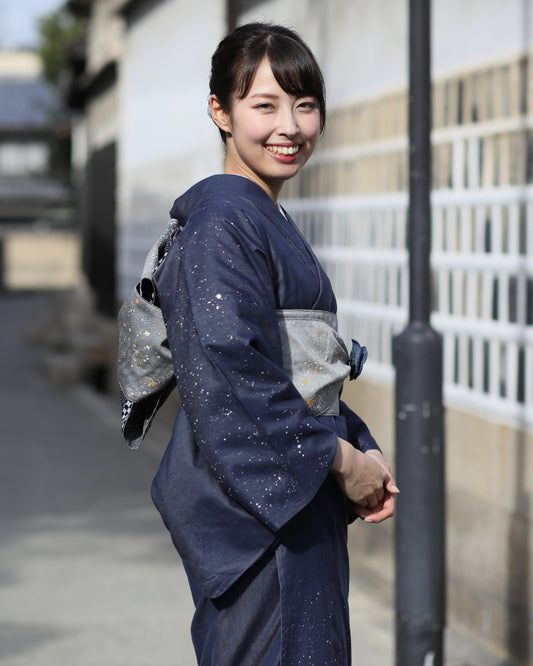
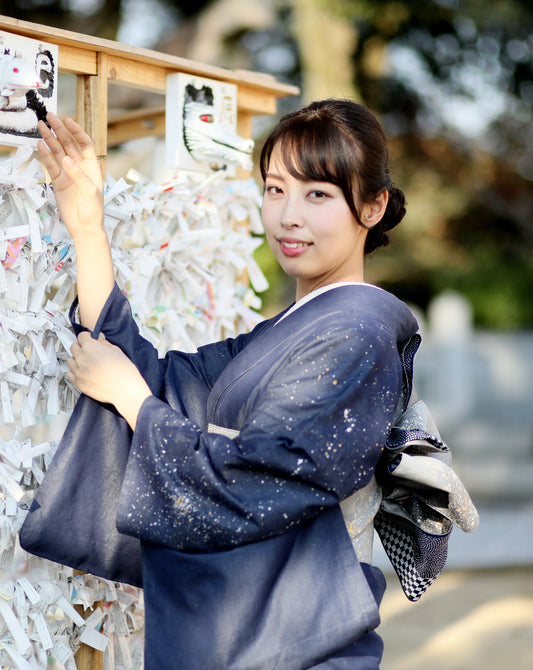
Why did we choose Cotton and Silk twill to make kimono — our traditional national dress?
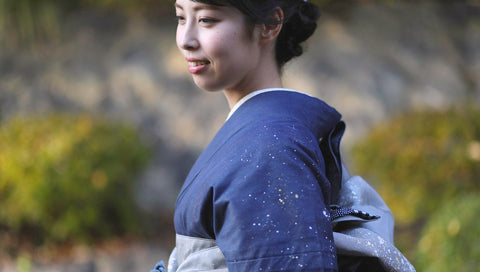
Lately, we've noticed more and more people enjoying kimono while sightseeing, or putting together their own original outfits with a Japanese sensibility.
Unlike practical, easy-to-wear Western clothing, kimono take real effort — both to put on and to move in.
But it's precisely because we sense a long history and culture within that effort that we find ourselves respecting kimono, and wanting to wear one ourselves.

And we're able to do that today only because those who came before us preserved kimono all the way to the present.
But anything we use eventually wears out and disappears if we don't take care of it.
Our ancestors made the clothing they wore from whatever fabric was available to them in their time.
In that same spirit, we believe it's our responsibility to make and pass down our national dress using the fabrics available to us today.
These days, we've also been facing increasingly severe heat waves and torrential rain, one after another — conditions that make cleaning and maintaining a traditional silk kimono a real challenge.
Given that, creating a kimono from an accessible fabric that doesn't demand so much upkeep, and passing it down to future generations, feels like a responsibility for those of us living today.
For that, we felt denim — a fabric loved not just in Japan but around the world — was the ideal choice.

That said, not just any denim would do.
National dress represents a country, and represents us as Japanese people — it has to carry a real sense of elegance.
We believe Cotton and Silk twill is, for this era, the finest fabric in both quality and dignity — truly worthy of carrying forward our national dress.

It has a refined sheen, a wonderful hand-feel, and real comfort to wear.
And despite containing silk, it can still be hand-washed — something made possible by weaving it with a warp thread far finer than what's typically used in denim, creating a tightly woven fabric with no room left for the silk to shrink.
Tradition isn't simply about preserving what already exists — it's about making use of what each era creates, and carrying it forward through continual innovation.

We sincerely hope that Cotton and Silk twill kimono will carry forward, for generations to come, Japan's exceptional craftsmanship, the spirit of Kojima, and the beauty of everyone who wears one.