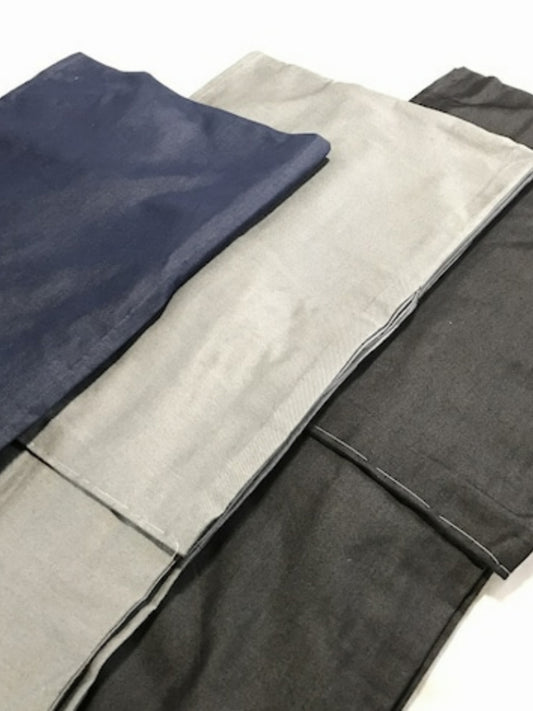
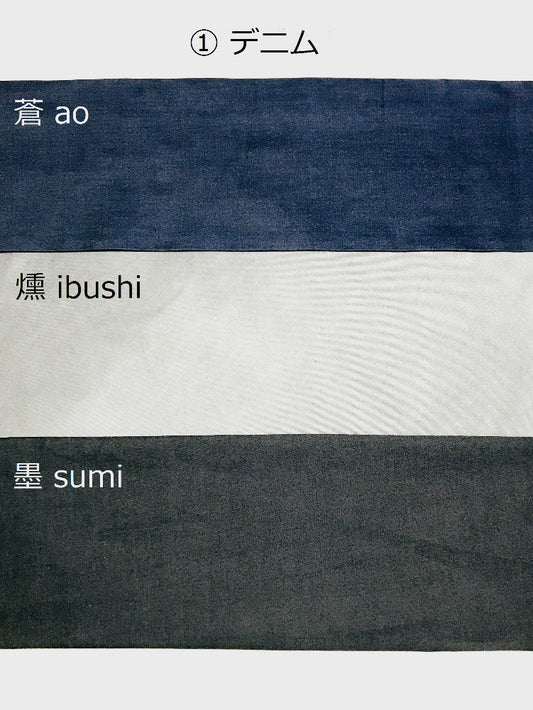
Tatamiberi is the fabric border attached along the long edges of a tatami mat, used in traditional Japanese-style rooms.

It serves several purposes — protecting the edges of the tatami surface from friction, and filling the small gaps that tend to form where mats meet each other.
In earlier eras, only people of high rank were permitted to use tatami at all, and for a time, the pattern and color of the tatamiberi trimming it served as a marker of that rank.

The material used for tatamiberi has changed over time too.
It was once made from wax-coated, brush-polished cotton or hemp thread, mostly in black or brown.
Today, synthetic-fiber weaves have become the standard — durable, lightweight yet sturdy, and available in a beautiful, glossy range of colors and patterns, which has also made it popular as a material for handmade goods.

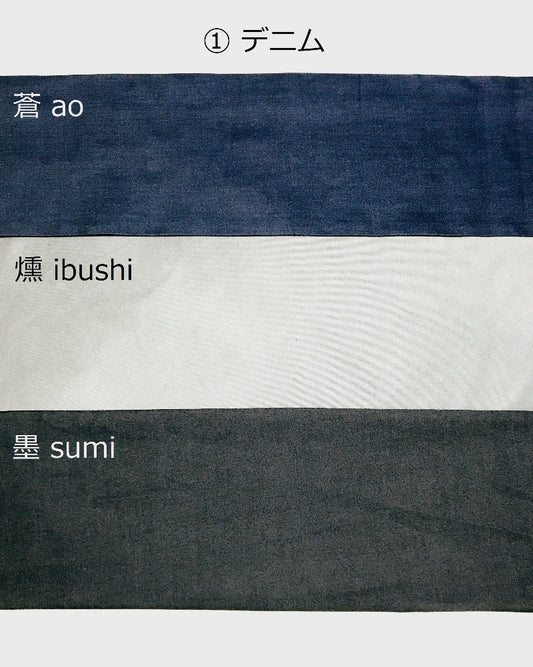
Kojima, in Kurashiki City, Okayama Prefecture, is known as a town of textiles, and the range of textiles produced there is remarkably broad — today, it includes denim, canvas, tatamiberi, and Sanadahimo, alongside a thriving business in sewing school uniforms, workwear, and jeans.

This diversity comes from a long history rooted in the cotton industry.
In 1882 (Meiji 15), Japan's first privately run spinning mill, Shimomura Spinning Mill, was established, and from that point on, the textile industry became an even bigger part of Kojima's identity.
Powered sewing machines imported from Europe made mass production of cotton goods possible, and Kojima became the top producer in Japan of tabi (traditional Japanese split-toe socks), an essential item at the time.
After World War I, as Western-style clothing became more common, Kojima was quick to pivot into producing school uniforms, and today the town is also known as a center for school uniform manufacturing.
Kojima has consistently stayed attuned to shifts in the times and in culture, and has protected its cotton-weaving industry through one strategic pivot after another.
Tatamiberi followed the same pattern. About a hundred years ago, when the industry shifted from cotton- and hemp-thread tatamiberi to a new style woven with glossy thread — known as kōki tatamiberi ("radiant tatami edging") — Kojima was quick to adopt it.

Why was Kojima able to read the shift in the times and respond so quickly?
Tatamiberi is a narrow-width weave, roughly 8cm across, and Kojima already had the looms and technical know-how suited to exactly that kind of weaving.
Even today, tatamiberi production remains concentrated in the areas of Kojima best known for narrow-width weaving — particularly Tanokuchi and Karakoto, the same areas associated with Sanadahimo.

Wide-width fabrics like denim and canvas, meanwhile, are produced in clearly distinct areas of the town.
This division by fabric width reflects an industry structure carried forward from an earlier era — and once you notice it, it's genuinely fascinating to see how the town itself reflects that history.
That foresight paid off just a few years later.
In 1923 (Taishō 12), the Great Kantō Earthquake struck, and in its aftermath, demand for tatamiberi grew dramatically.
Today, Kojima accounts for roughly 80% of Japan's total tatamiberi production.
Housing trends in Japan have shifted in recent years — fully traditional Japanese-style homes have become less common, and tatami and tatamiberi aren't as much a part of everyday life as they once were.
Even so, Kojima's tatamiberi industry, guided by the belief that "the present is never the final word — we keep weaving something new," continues to grow beyond its original role as a building material.

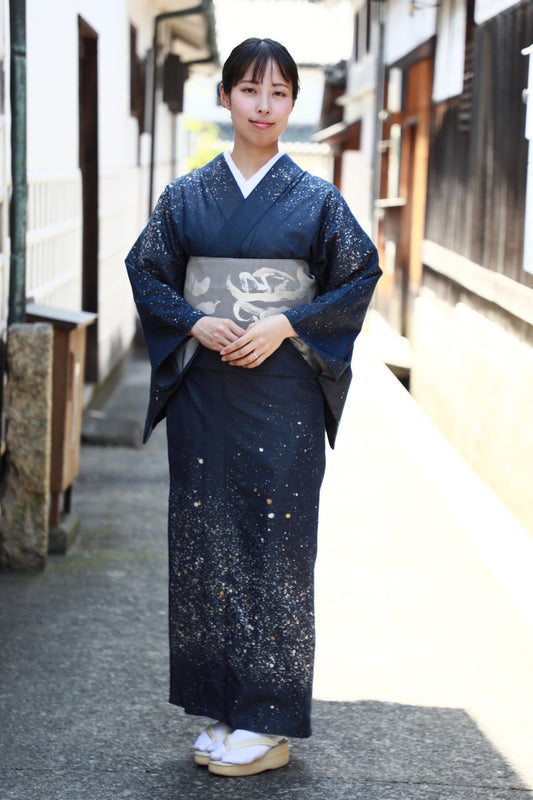
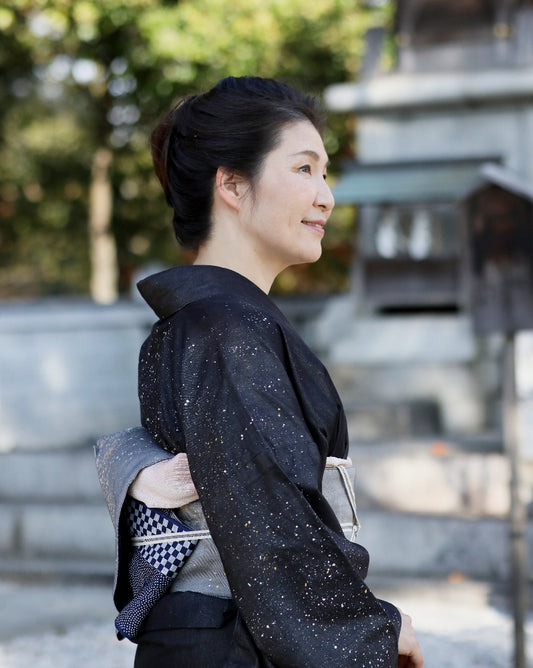
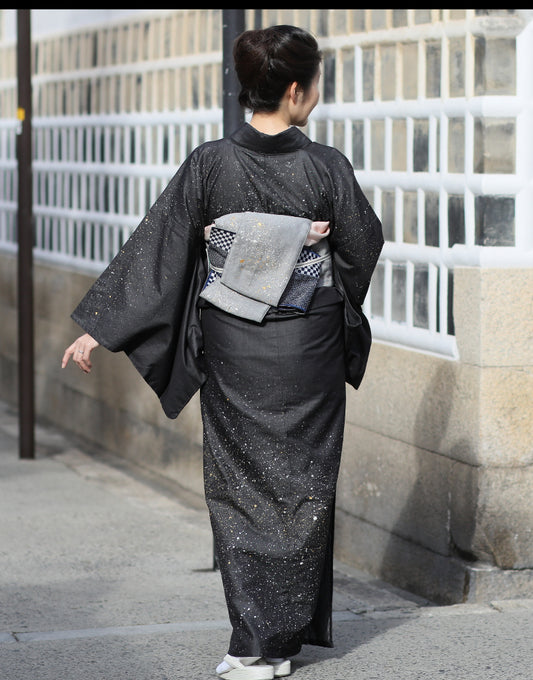
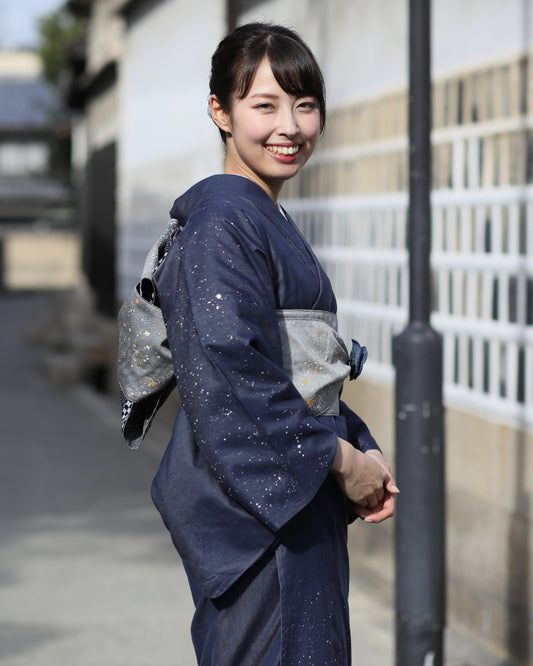
One example of this is its collaboration with tradition: by using tatamiberi in Japan's national dress, Kojima has introduced a new material into a kimono industry that's been in decline, while also proposing a new use for tatamiberi itself.
That collaboration is what became Kojima Obi.
Why Turn Tatamiberi into National Dress?
Lately, we've noticed more and more people enjoying kimono while sightseeing, or restyling older kimono in their own original way as part of a broader interest in Japanese-inspired fashion.
Unlike practical, easy-to-wear Western clothing, kimono take real effort — both to put on and to move in.
But it's precisely because we sense a long history and culture within that effort that we find ourselves respecting kimono, and wanting to wear one ourselves.
No matter how much the times change, we believe people will always hold onto that same respect for tradition going forward.

Tatamiberi and national dress are both wonderful traditions in their own right — bringing the two together feels less like a coincidence and more like something that was always meant to happen.
There's also a broader conversation happening today around regional revitalization — bringing new energy to Japan's regions and reinvigorating local economies.

Kojima Obi is very much a part of that movement, and we believe it will grow into one of Okayama's next great regional specialties.
It's been about a hundred years since tatamiberi began being made with today's materials.
What can we leave behind for the hundred years still to come?
It's a question each of us has a part in answering.